AI Certification Comparison: AWS, Microsoft & Google
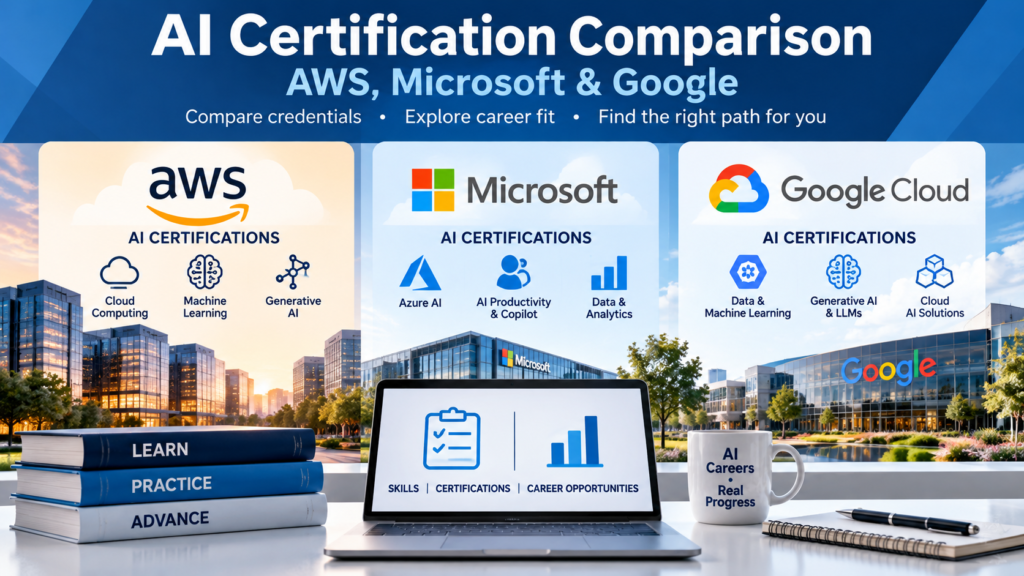
Choosing an AI certification can be confusing. AWS, Microsoft, and Google offer different credentials, learning paths, and approaches to artificial intelligence. The right choice depends on your experience, career goals, budget, and the technologies you expect to use.
This guide compares AI certification options across these major providers, including what they cover, who they are designed for, and how they may fit into different career paths.
You’ll also find links to our detailed certification guides and practical advice for deciding whether a certification is worth pursuing.
Our goal is to help you make an informed decision—not to suggest that one certification is best for everyone.
How AWS, Microsoft, and Google AI Certifications Differ
AWS, Microsoft, and Google offer AI certifications that reflect their respective cloud platforms, technologies, and professional applications. Although some of the underlying AI concepts overlap, the credentials are not interchangeable.
Amazon Web Services (AWS) focuses on AI and machine learning within the AWS cloud environment. Its certification options address different experience levels, from foundational AI knowledge to technical implementation and machine learning operations.
Microsoft offers AI credentials associated with Azure and its broader technology ecosystem. Depending on the credential, learners may focus on AI fundamentals, building AI solutions, or using AI technologies in professional environments.
Google Cloud offers credentials related to cloud computing, machine learning, and AI solutions. Its certification paths include options for professionals who work with Google Cloud technologies and those developing or operating machine learning systems.
The most important distinction is not which company offers the most recognizable name. It is whether a credential teaches and validates skills that match your career goals, existing experience, and the technology environments in which you expect to work.
Certification offerings can change. Exam names, fees, requirements, and availability should always be confirmed with the issuing provider before enrolling or paying for an exam.
AI Certification Comparison at a Glance
| Provider and Certification | Level | Best Suited For |
| AWS Certified AI Practitioner | Foundational | Beginners and professionals learning AI concepts and AWS fundamentals |
| AWS Certified Machine Learning Engineer – Associate | Associate | Technical professionals developing, deploying, and maintaining machine learning solutions using AWS |
| Microsoft Azure AI Fundamentals (AI-901) | Beginner | Beginners and professionals seeking foundational knowledge of AI concepts and Microsoft Azure AI services |
| Microsoft Azure AI Apps and Agents Developer Associate (AI-103) | Intermediate | Developers building AI applications and agents using Microsoft Azure technologies |
| Google Cloud Generative AI Leader | Foundational | Business professionals, managers, and beginners who want to understand generative AI and its business applications |
| Google Cloud Professional Machine Learning Engineer | Professional | Experienced technical professionals who design, develop, deploy, and maintain machine learning solutions using Google Cloud |
Which AI Certification Should You Choose?
The best AI certification is not necessarily the most advanced or the most recognizable. It is the one that matches your current experience, the skills you want to develop, and the type of work you hope to do. Before choosing a certification, consider whether your goal is to understand AI concepts, use AI in business, develop AI applications, or build and maintain machine learning systems.
If You’re New to AI
If you’re just beginning to learn about artificial intelligence, start with foundational knowledge rather than an advanced technical certification. AWS Certified AI Practitioner and Microsoft Azure AI Fundamentals are options for learning AI concepts and understanding how AI services are used. Google Cloud’s Generative AI Leader certification is another option, particularly for people interested in business applications of generative AI.
These credentials emphasize different technology environments, so consider which platform is most relevant to your work or career interests. You can also begin with free introductory training before paying for a certification exam. A certification can demonstrate knowledge, but practical experience and the ability to apply what you’ve learned are equally important.
If You Want a Technical AI Career
If your goal is to become a machine learning engineer, AI application developer, or another technical AI professional, look for certifications that emphasize building, deploying, and maintaining AI systems rather than simply understanding AI concepts.
AWS Certified Machine Learning Engineer – Associate focuses on implementing and operating machine learning solutions in AWS environments. Microsoft Azure AI Apps and Agents Developer Associate is more closely aligned with developing AI applications and agents using Microsoft technologies. Google Cloud Professional Machine Learning Engineer emphasizes designing, developing, and operating machine learning solutions using Google Cloud.
These credentials are generally more appropriate for learners who already have some programming, cloud computing, or technical experience. Before investing in an exam, review the provider’s recommended experience and exam objectives. Building practical projects in Python, working with APIs, and understanding data and machine learning fundamentals can also help prepare you for technical AI roles.
Remember that earning a certification does not guarantee employment. Employers may also evaluate your projects, problem-solving abilities, professional experience, and understanding of the technologies used in the role.
If You’re a Business Professional or Career Changer
If you’re a business professional or considering a career change, you may not need an advanced technical AI certification. Your first priority should be understanding how AI can improve the work you already do or help you move toward a new role.
Google Cloud Generative AI Leader may appeal to professionals interested in business applications, AI strategy, and organizational adoption. AWS Certified AI Practitioner and Microsoft Azure AI Fundamentals are also options for developing foundational AI knowledge within their respective technology environments.
Before paying for a certification, identify the skills employers expect in your target role. For example, someone working in marketing, healthcare administration, education, or small-business management may benefit more immediately from learning to evaluate AI tools, write effective prompts, analyze information, and use AI responsibly.
If you’re changing careers, consider combining introductory AI training with practical projects related to your existing experience. A certification can support your professional development, but it should be part of a broader learning and career plan rather than your only qualification.
The most useful question is not simply, “Which certification should I earn?” It is, “What work do I want to do, and which combination of skills, experience, and credentials will help me get there?”
AI Certification Costs, Exam Requirements, and Preparation Time
AI certification costs vary by provider, credential level, and exam version. In addition to the exam registration fee, consider whether you will need paid training, practice exams, cloud computing resources, or additional attempts if you do not pass the first time.
Preparation time also varies. A beginner pursuing foundational AI knowledge may need a different learning schedule from an experienced developer preparing for a professional machine learning certification. There is no single preparation timeline that fits everyone.
Before registering, review the official exam guide, recommended experience, current pricing, and available training resources. Whenever possible, begin with free learning materials and practice activities before committing to paid courses.
AI Certification Exam Fees Compared
| Certification | Published U.S. Exam Fee |
| AWS Certified AI Practitioner | $100 |
| AWS Certified Machine Learning Engineer – Associate | $75 beta / $150 standard |
| Microsoft Azure AI Fundamentals (AI-901) | $99 |
| Microsoft Azure AI Apps and Agents Developer Associate (AI-103 | $165 |
| Google Cloud Generative AI Leader | $99 |
| Google Cloud Professional Machine Learning Engineer | $200 |
Important: Exam fees are based on published U.S. prices and may vary by country, taxes, discounts, and exam availability. AWS Certified Machine Learning Engineer – Associate has a $75 beta price for the updated MLA-C02 exam; the standard Associate exam fee is $150. Beta pricing and availability are subject to change. Always check the certification provider’s official website for the latest fees and exam details before registering.
Are AI Certifications Worth It?
An AI certification can be worthwhile when it supports a specific career goal, helps you develop useful skills, or demonstrates knowledge that employers value. However, earning a certification does not automatically qualify someone for an AI-related job.
The value depends on your existing experience, the type of work you want to do, and whether employers in your target field recognize the credential. A certification that benefits a cloud engineer may be less useful to a marketing professional, small business owner, or someone exploring AI for the first time.
Before paying for an exam, review actual job postings for roles that interest you. Look for the technologies, skills, and certifications employers mention. Then compare those requirements with what the certification teaches.
For many learners, a combination of foundational knowledge, hands-on projects, and practical workplace experience may provide more value than collecting multiple certifications without a clear purpose.
Five Questions to Ask Before Choosing an AI Certification
1. What career or workplace goal am I trying to achieve?
Identify the job, responsibility, or practical skill you want to develop. A certification should support a meaningful goal rather than simply add another credential to your résumé.
2. Does this certification match my current experience?
Review the recommended knowledge and prerequisites. Beginners may benefit from foundational certifications, while advanced technical credentials often require programming, cloud computing, or machine learning experience.
3. Do employers in my target field value this certification?
Examine relevant job postings and employer requirements. Look for evidence that the credential or its underlying skills are useful for the work you want to pursue.
4. What will the total investment be?
Consider exam fees, training materials, practice tests, preparation time, and possible retake costs. Free or low-cost learning resources may help reduce the expense.
5. How will I apply what I learn?
Plan a small project, workplace improvement, or practical exercise that demonstrates your knowledge. Being able to explain and apply your skills can be more valuable than holding a certificate alone.
Explore Our AWS, Microsoft, and Google AI Certification Guides
Each certification provider offers different learning opportunities, exam requirements, and career pathways. Our detailed guides explore these differences and can help you decide which certification options deserve further consideration.
Use the guides below to learn more about each provider before committing time or money to a certification.
AWS AI Certifications: A Practical Guide for 2026
Microsoft AI Certification Guide
Google AI Certifications: A Practical Guide
Official Certification Information and Exam Updates
AWS Certification — Official Website
Microsoft Credentials — Official Website
Google Cloud Certifications — Official Website
Final Thoughts: Choosing the Right AI Certification
Choosing an AI certification is not about finding the most prestigious credential. It is about finding a learning path that fits your experience, interests, career goals, and budget.
AWS, Microsoft, and Google Cloud each offer valuable opportunities to develop AI knowledge. The right choice depends partly on which technologies you expect to use and the type of work you want to pursue.
If you are just beginning, start with foundational learning and practical exercises before committing to an expensive or advanced certification. If you already have technical experience, compare certification requirements with the skills employers are seeking in your field.
Remember that a certification is one part of career development—not a guarantee of employment or advancement. Continue building practical skills, documenting your projects, and adapting as AI technologies and workplace expectations change.
AiCareerTrack will continue reviewing AI certification developments to help readers make informed learning and career decisions.