Transportation & Logistics
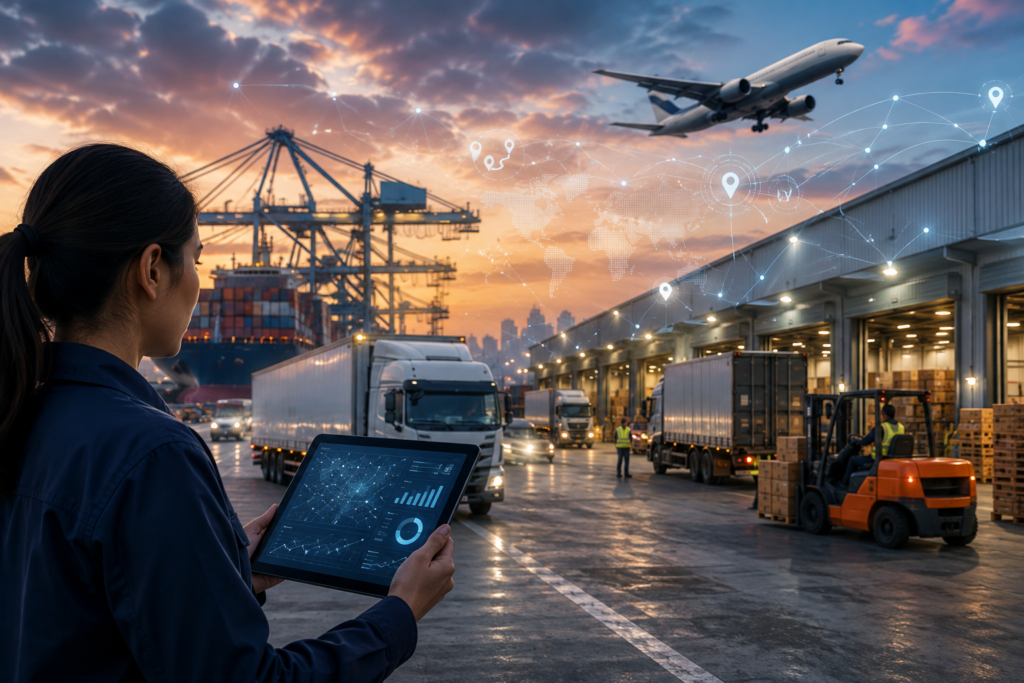
AI in Transportation and Logistics is changing how people, products, and materials move through transportation networks and supply chains. AI is increasingly being used for route planning, fleet management, demand forecasting, warehouse operations, vehicle maintenance, traffic analysis, and logistics coordination.
For transportation and logistics professionals, AI can create opportunities to combine industry experience with data analysis, automation, intelligent systems, and new digital tools. Drivers, dispatchers, fleet managers, warehouse professionals, supply-chain specialists, engineers, analysts, and operations leaders may all see portions of their work change as AI becomes more widely adopted.
Transportation and logistics operate in the physical world, where weather, traffic, equipment failures, customer needs, safety requirements, and unexpected disruptions can quickly change plans. AI can help professionals analyze information and make decisions, but experienced human judgment remains essential for managing complex real-world operations.
Table of Contents
- How AI Is Changing Transportation and Logistics
- Where AI Is Being Used in Transportation and Logistics
- AI Careers and Emerging Roles in Transportation and Logistics
- AI Skills for Transportation and Logistics Professionals
- Education and Certifications for AI Transportation Careers
- Opportunities for Transportation and Logistics Professionals
- Challenges and Responsible AI Use in Transportation and Logistics
- How to Prepare for an AI-Enabled Transportation or Logistics Career
- Explore Related AI Careers and Skills
How AI in Transportation and Logistics Is Changing the Industry
AI is becoming integrated into the systems organizations use to plan routes, manage fleets, coordinate shipments, operate warehouses, forecast demand, and monitor transportation networks. These technologies can help organizations process large amounts of information quickly, but their value depends on accurate data, reliable systems, and professionals who understand how transportation and logistics actually work.
Where AI Is Being Used in Transportation and Logistics
AI is being applied across transportation networks, vehicle fleets, warehouses, supply chains, shipping operations, and delivery services. Some applications help organizations predict what may happen next, while others optimize routes, automate physical tasks, monitor equipment, or help professionals respond more quickly to changing conditions.
Route Optimization and Dispatching
AI can analyze traffic, distance, delivery schedules, vehicle capacity, weather, and other information to recommend efficient routes. Dispatchers and transportation professionals can use these systems to adjust plans as conditions change throughout the day.
Fleet Management
Fleet operators can use AI to analyze vehicle utilization, fuel consumption, driver activity, maintenance information, and operating costs. These insights can help organizations improve efficiency while maintaining appropriate safety and operational standards.
Predictive Maintenance
Data from vehicles and equipment can help organizations identify patterns that may indicate developing mechanical problems. Predictive maintenance can help fleets schedule service before failures occur, potentially reducing downtime and unexpected repairs.
Warehousing and Robotics
Warehouses increasingly use robotics, computer vision, automated storage systems, and AI-assisted inventory management. These technologies can help move, sort, locate, and track products while warehouse professionals manage exceptions, safety, equipment, and overall operations.
Supply Chain Forecasting
AI can help organizations analyze historical demand, inventory levels, supplier information, transportation capacity, and other factors when planning supply chains. Unexpected events can still disrupt forecasts, making experienced supply-chain professionals essential.
Autonomous and Assisted Vehicles
AI is an important component of advanced driver-assistance systems and the continuing development of autonomous vehicles. These technologies use combinations of cameras, sensors, mapping, software, and machine learning to interpret surroundings and support vehicle operation.
Traffic and Transportation Management
Transportation agencies and organizations can use AI to analyze traffic patterns, congestion, incidents, passenger demand, and infrastructure information. These systems may help improve traffic management, public transportation planning, and responses to changing conditions.
Last-Mile Delivery
The final stage of delivering products to customers can be expensive and complex. AI can help organizations plan delivery routes, estimate arrival times, allocate drivers and vehicles, and respond to changing demand or delivery conditions.
AI Careers and Emerging Roles in Transportation and Logistics
As transportation and logistics organizations adopt artificial intelligence, career opportunities are developing for professionals who can combine industry knowledge with data, automation, intelligent systems, and operational decision-making. Some roles focus directly on AI technology, while others apply AI to fleets, warehouses, supply chains, transportation networks, and delivery operations.
Transportation Data Analyst
Transportation Data Analysts examine information involving routes, vehicles, shipments, traffic, costs, delivery performance, and customer demand. AI and advanced analytics can help these professionals identify patterns and support better operational decisions.
Logistics Optimization Specialist
Logistics Optimization Specialists help organizations improve how products and materials move through supply chains. Their work may involve route planning, network design, inventory, transportation capacity, scheduling, and analytical tools that use AI to evaluate possible solutions.
Fleet Technology Specialist
Fleet Technology Specialists help organizations implement and manage technologies involving vehicle tracking, telematics, maintenance systems, routing, safety, and performance monitoring. As AI becomes integrated into fleet-management platforms, knowledge of both transportation operations and technology can become increasingly valuable.
Autonomous Systems Engineer
Autonomous Systems Engineers help develop technologies that allow vehicles, robots, drones, and other machines to interpret their environments and operate with varying degrees of automation. These careers can involve software, sensors, computer vision, robotics, controls, mapping, and machine learning.
Supply Chain Data Scientist
Supply Chain Data Scientists use statistics, programming, machine learning, and operational data to help organizations forecast demand, manage inventory, evaluate risks, optimize networks, and improve supply-chain performance.
Warehouse Automation and Robotics Specialist
These professionals help design, implement, operate, or maintain automated warehouse systems. Their work may involve robotics, computer vision, sensors, material-handling equipment, warehouse-management software, and AI-enabled optimization.
Predictive Maintenance and Fleet Reliability Specialist
Professionals in this area combine vehicle or equipment knowledge with sensor data, analytics, and AI to identify developing problems and improve reliability. Experience in maintenance, engineering, fleet operations, or transportation equipment can provide a useful foundation.
Intelligent Transportation Systems Specialist
Intelligent Transportation Systems specialists work with technologies used to manage traffic, roads, transit systems, connected vehicles, sensors, communications, and transportation data. AI can help these systems analyze conditions and support transportation planning and operations.
AI Logistics Consultant
AI Logistics Consultants help transportation and supply-chain organizations identify useful AI applications, evaluate technologies, redesign workflows, and implement new systems. These roles can combine operational experience, analytical knowledge, technology understanding, and communication skills.
AI Skills for Transportation and Logistics Professionals
Transportation and logistics professionals do not necessarily need advanced technical training to benefit from AI. The most useful skills depend on the role, but combining industry knowledge with AI literacy, data analysis, digital tools, communication, and problem-solving can provide a strong foundation.
AI Fundamentals
Understanding how artificial intelligence, machine learning, generative AI, automation, and predictive systems work at a practical level can help transportation professionals evaluate new technologies and recognize their limitations.
Data Analysis
Transportation and logistics generate large amounts of information involving vehicles, shipments, routes, inventory, delivery times, costs, customers, and equipment. Professionals who can analyze and interpret this data may be better prepared to work with AI-enabled operational systems.
Programming
Programming can be especially useful for transportation analysts, data scientists, autonomous-systems professionals, automation specialists, and people developing logistics applications. Python and SQL can be valuable for working with transportation and supply-chain data.
Prompt Engineering
Generative AI can assist with research, documentation, communications, data interpretation, training materials, and operational planning. Clear prompting can improve results, but professionals should verify important information before using it to make operational decisions.
Cloud & AI Platforms
Transportation organizations increasingly use cloud systems to connect vehicles, warehouses, applications, sensors, analytics, and operational data. Understanding cloud and AI platforms can be particularly valuable for technology, analytics, fleet, and intelligent-transportation roles.
Communication & Leadership
Transportation and logistics operations involve drivers, dispatchers, warehouse teams, maintenance personnel, customers, suppliers, technology teams, and management. Professionals who can explain technology clearly and coordinate across these groups can help organizations implement AI more effectively.
Operations and Supply Chain Knowledge
AI recommendations are more useful when professionals understand how transportation and supply chains work in practice. Knowledge of routing, capacity, inventory, scheduling, warehousing, equipment, service requirements, and operational constraints provides essential context.
Safety and Risk Management
Transportation involves vehicles, equipment, infrastructure, and people. Professionals working with AI should understand how safety, reliability, cybersecurity, regulatory requirements, and human oversight affect automated or data-driven decisions.
Education and Certifications for AI Transportation Careers
There is no single educational path into an AI-enabled transportation or logistics career. The appropriate preparation depends on the role. Some positions emphasize transportation, logistics, supply-chain management, engineering, or operations experience, while more technical careers may require stronger backgrounds in data science, programming, automation, or artificial intelligence.
Education
Degrees or training in supply-chain management, logistics, transportation, operations management, industrial engineering, computer science, data science, or related fields can provide useful foundations for AI-enabled transportation careers.
Professionals who already have experience in transportation, fleet operations, warehousing, dispatching, maintenance, or supply chains may not need another degree simply to begin working with AI. Targeted education in data analysis, AI fundamentals, automation, logistics technology, or cloud systems may complement expertise they already possess.
Certifications
Certifications can be valuable when they strengthen skills relevant to a specific transportation or logistics career. Depending on the role, useful credentials may involve supply-chain management, logistics, fleet management, data analytics, cloud technology, project management, automation, or artificial intelligence.
When evaluating a certification, consider:
- Whether employers in your target field recognize it.
- Whether the skills apply to the transportation or logistics work you want to pursue.
- Whether the program includes practical projects or hands-on exercises.
- Whether the technology is actually used by employers in the industry.
- Whether the credential complements your existing operational experience.
- The total cost and time commitment.
- Whether licenses or regulatory credentials are also required for your particular occupation.
What Matters More Than a Certificate?
A certification can demonstrate training, but transportation and logistics employers also value people who understand real-world operations and can solve practical problems.
Useful projects or work samples might demonstrate your ability to:
- Analyze transportation or delivery data.
- Develop a route-optimization example.
- Create a fleet-performance dashboard.
- Analyze public supply-chain or logistics data.
- Develop a predictive-maintenance example using simulated vehicle data.
- Explore warehouse automation or inventory optimization.
- Create a demand-forecasting project.
- Identify operational risks or bottlenecks using data.
- Explain how an AI system could improve a transportation workflow.
- Document assumptions, limitations, safety considerations, and results.
Career Tip: Transportation and logistics experience can be a significant advantage. Someone who understands how routes, fleets, warehouses, shipments, customers, and unexpected disruptions work in the real world can provide context that technology alone cannot supply.
Opportunities for Transportation and Logistics Professionals
AI does not necessarily mean transportation and logistics professionals need to leave their current careers. For many people, the strongest opportunity may be to combine years of operational experience with new skills in AI, data, automation, and digital transportation systems.
Enhance Your Current Role
Transportation and logistics professionals can use AI to assist with planning, research, documentation, communications, data analysis, scheduling, and other appropriate tasks. Professionals who understand real-world operations can evaluate whether AI recommendations are practical under actual working conditions.
Become the AI Resource on Your Team
Professionals who develop practical AI knowledge can help coworkers understand new tools, identify useful applications, recognize limitations, and improve workflows. This can create leadership opportunities without requiring a move into a dedicated technical position.
Move Into Transportation Data and Analytics
Dispatchers, operations professionals, fleet specialists, and supply-chain workers already understand much of the information transportation organizations collect. Developing skills in spreadsheets, visualization, databases, statistics, and AI can create opportunities in analytics and operational decision support.
Develop Fleet Technology Skills
Fleet operations increasingly involve telematics, vehicle sensors, routing platforms, maintenance systems, cameras, safety technology, and data analytics. Professionals who understand both vehicles and these digital systems can help organizations implement and manage new fleet technologies.
Explore Warehouse Automation
Warehouse professionals can develop expertise in robotics, automated material handling, computer vision, warehouse-management systems, sensors, and AI-assisted inventory tools. Operational experience can be especially valuable when organizations introduce automation into existing facilities.
Specialize in Supply Chain Optimization
Supply-chain professionals can combine industry knowledge with forecasting, analytics, optimization, and AI. These skills can support decisions involving inventory, suppliers, transportation capacity, network design, and responses to disruptions.
Move Into Predictive Maintenance and Reliability
Drivers, technicians, mechanics, fleet managers, and maintenance professionals understand how vehicles and equipment behave in real operating conditions. Adding skills in sensors, telematics, data analysis, and predictive systems can create opportunities in fleet reliability and maintenance technology.
Help Implement Intelligent Transportation Systems
Transportation agencies and organizations increasingly use connected sensors, traffic-management systems, digital communications, analytics, and AI. Professionals with transportation experience can help implement, operate, evaluate, and improve these systems.
Challenges and Responsible AI Use in Transportation and Logistics
AI can improve transportation and logistics operations, but errors can affect vehicles, passengers, workers, shipments, equipment, and public safety. Organizations need to consider safety, cybersecurity, data quality, privacy, system reliability, and human accountability when AI influences transportation decisions.
Safety
Transportation organizations should evaluate AI-enabled systems within established safety practices and regulatory requirements. Automated recommendations should not override appropriate safety procedures, equipment limitations, or qualified professional judgment.
Autonomous and Assisted Systems
Autonomous and driver-assistance technologies can perform increasingly sophisticated tasks, but their capabilities and limitations vary. Organizations and professionals need to understand when human supervision or intervention is required and avoid assuming that automation can safely handle every situation.
Cybersecurity
Connected vehicles, warehouses, transportation networks, sensors, and logistics platforms can create cybersecurity risks. Organizations need to protect systems, communications, credentials, operational data, and connected equipment from unauthorized access or disruption.
Data Quality
AI recommendations depend heavily on the information provided to the system. Incorrect location data, incomplete shipment records, inaccurate sensor readings, or outdated operational information can lead to poor predictions and decisions.
Privacy and Monitoring
Transportation technologies can collect information about vehicle locations, employee activity, customers, shipments, and operational behavior. Organizations should use this information responsibly and follow applicable privacy requirements and workplace policies.
Algorithmic Decisions
AI systems may help prioritize shipments, assign routes, forecast demand, schedule work, or evaluate operational performance. Organizations should understand how consequential automated decisions are made and provide appropriate human review when necessary.
Workforce and Automation
Automation may change the responsibilities of drivers, dispatchers, warehouse employees, maintenance workers, analysts, and other transportation professionals. Some tasks may become automated while new responsibilities emerge involving technology, data, supervision, maintenance, and exception handling.
Human Oversight and Accountability
Organizations need clear responsibility for AI-enabled transportation systems. Qualified people should remain involved when decisions affect safety, vehicle operation, employees, customers, regulatory compliance, or other consequential outcomes.
Professionals working with AI in Transportation and Logistics can also use resources from the U.S. Department of Transportation to follow developments in transportation technology, safety, automation, infrastructure, and emerging transportation systems.
How to Prepare for an AI-Enabled Transportation or Logistics Career
You do not need to become an AI engineer to prepare for changes in transportation and logistics. A practical approach is to build on your existing operational knowledge while developing AI, data, and digital skills that complement the type of work you want to pursue.
- Strengthen your industry knowledge. Continue developing expertise in transportation, logistics, fleet operations, warehousing, maintenance, supply chains, or another area relevant to your career.
- Build AI literacy. Learn the fundamentals of machine learning, generative AI, automation, predictive systems, and common transportation applications.
- Develop data skills. Practice analyzing routes, shipments, inventory, vehicles, costs, delivery performance, or other operational information.
- Learn relevant transportation technologies. Depending on your career, this may include telematics, routing systems, warehouse technology, sensors, robotics, fleet-management platforms, or intelligent transportation systems.
- Build practical projects. Use public, simulated, or appropriate non-confidential data to explore routing, forecasting, fleet performance, predictive maintenance, or logistics optimization.
- Understand safety and cybersecurity. Learn how reliability, privacy, security, regulation, and human oversight affect AI-enabled transportation systems.
- Strengthen communication and problem-solving. Transportation operations frequently involve unexpected events that require people to communicate clearly and make practical decisions.
- Choose a direction. Decide whether you want to strengthen your current role or move toward analytics, fleet technology, supply-chain optimization, warehouse automation, intelligent transportation, autonomous systems, or another specialization.
Explore Related AI Careers and Skills
AI opportunities in transportation and logistics connect with careers and skills across AiCareerTrack. Continue exploring the areas that best match your transportation experience, operational knowledge, technical interests, and career goals.
- Data Scientist — explore careers that use data, statistics, programming, and machine learning to identify patterns and support better decisions.
- Machine Learning Engineer — learn about careers focused on developing, deploying, and maintaining machine learning systems.
- AI Solutions Architect — explore how professionals design AI solutions that connect applications, data, cloud platforms, and organizational systems.
- AI Fundamentals — build a practical understanding of artificial intelligence and how it is being used in the workplace.
- Data Analysis — develop skills for analyzing information, identifying patterns, and communicating useful insights.
- Programming — strengthen coding skills that can support transportation analytics, automation, logistics applications, and AI development.
- Prompt Engineering — learn techniques for working more effectively with generative AI systems.
- Cloud & AI Platforms — learn how cloud technologies support connected vehicles, logistics data, analytics, applications, and artificial intelligence.
- Communication & Leadership — strengthen the human skills needed to coordinate operations, explain technology, and guide organizational change.
For Data Scientist, Machine Learning Engineer, and AI Solutions Architect, link them only if their full career destination pages are developed and live. Otherwise leave them as plain text.
AI is likely to continue changing how people, products, and materials move through transportation networks and supply chains. Professionals who combine transportation or logistics expertise with practical AI skills, strong operational judgment, and an understanding of real-world systems can help organizations use these technologies safely and effectively.