AI’s Impact on Healthcare Careers
Healthcare Careers in the Age of AI
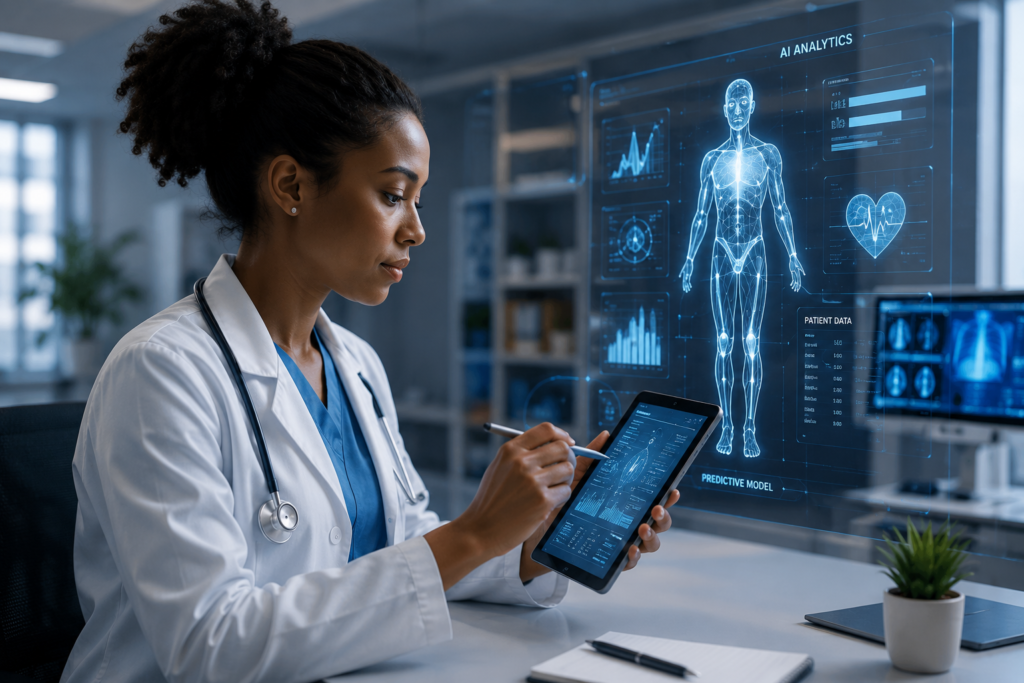
Artificial Intelligence is rapidly reshaping healthcare by helping medical professionals diagnose diseases, analyze medical images, personalize treatments, and improve patient care. While AI will not replace doctors, nurses, therapists, or other healthcare professionals, it is becoming an increasingly valuable tool that helps them work more efficiently and make better-informed decisions. For students considering healthcare careers and professionals already working in medicine, understanding AI is becoming an important part of long-term career success.
Key Takeaways
- AI is improving patient care by assisting—not replacing—healthcare professionals.
- New career opportunities are emerging at the intersection of healthcare and AI.
- Healthcare workers who understand AI tools will have a competitive advantage.
- Human compassion, communication, and ethical judgment remain irreplaceable.
- Continuous learning will be essential as healthcare technology continues to evolve.
Why AI Is Transforming Healthcare
Healthcare generates enormous amounts of information every day, including patient records, medical images, laboratory results, prescriptions, and research studies. AI can quickly analyze this information to identify patterns that may help healthcare professionals make faster, more accurate decisions. Rather than replacing medical expertise, AI serves as a powerful assistant that helps healthcare teams focus more time on patient care.
Where AI Is Already Making a Difference
Medical Imaging
AI systems can help radiologists analyze X-rays, CT scans, MRIs, and mammograms by identifying patterns that may indicate disease. These tools can improve efficiency and provide an additional level of review during the diagnostic process.
Clinical Decision Support
AI can analyze patient information and provide recommendations that assist physicians in selecting treatments, identifying possible drug interactions, and recognizing patients who may need immediate attention. Medical professionals remain responsible for the final decisions, but AI can provide valuable support.
Administrative Efficiency
Healthcare organizations spend significant time managing documentation, scheduling, billing, and insurance processing. AI is helping automate many of these administrative tasks, allowing healthcare professionals to spend more time caring for patients.
Drug Discovery and Research
Researchers are using AI to analyze enormous medical datasets, helping identify potential new medications and accelerating the development of treatments for complex diseases. This has the potential to reduce research timelines and improve patient outcomes.
New Career Opportunities
As AI adoption grows, new healthcare careers are emerging, including:
- Clinical AI Specialist
- Healthcare Data Analyst
- Medical AI Product Manager
- Digital Health Consultant
- Healthcare Informatics Specialist
- AI Implementation Specialist
- Medical Technology Trainer
Many of these roles combine healthcare knowledge with technology rather than requiring advanced programming skills.
Skills Healthcare Professionals Should Develop
Healthcare workers do not need to become software engineers to benefit from AI. Instead, they should focus on developing practical skills such as:
- AI literacy
- Data interpretation
- Digital communication
- Critical thinking
- Ethical decision-making
- Adaptability
- Continuous learning
Professionals who combine strong clinical expertise with an understanding of AI will be well positioned as healthcare continues to evolve.
Challenges and Ethical Considerations
The use of AI in healthcare also raises important questions. Healthcare organizations must protect patient privacy, reduce bias in AI systems, maintain transparency, and ensure that medical decisions continue to involve qualified professionals. Trust remains one of the most important elements of healthcare, and AI should strengthen—not weaken—that trust.
Looking Ahead
Artificial Intelligence will continue expanding throughout healthcare over the coming decade.
We can expect improvements in:
- Personalized medicine
- Early disease detection
- Remote patient monitoring
- Robotic-assisted procedures
- Predictive analytics
- Administrative automation
The most successful healthcare professionals will embrace lifelong learning while continuing to provide the compassion, empathy, and human judgment that technology cannot replace.
Final Thoughts
Artificial Intelligence is changing healthcare in remarkable ways, but the future of medicine will always depend on people. Doctors, nurses, therapists, technicians, researchers, and countless other healthcare professionals bring qualities that AI cannot replicate: empathy, ethical judgment, creativity, and human connection. Rather than replacing healthcare workers, AI is becoming a powerful partner that helps professionals deliver safer, faster, and more personalized care. For anyone considering a healthcare career—or already working in one—developing AI knowledge today is an investment in the future.
Continue Your AI Career Journey
Explore more articles, practical guides, and resources to help you build the skills and knowledge needed to thrive in an AI-driven workplace.
➡️ 10 In-Demand AI Careers to Watch in 2026
Explore ten fast-growing AI careers and discover where your interests and skills may fit best.
➡️ Essential AI Skills for Professionals in 2026
Learn the practical AI skills that employers increasingly expect across industries.
➡️ Resources
Explore AI tools, certifications, learning platforms, and career resources to continue building your knowledge.
Looking ahead
Once this article is published, all three featured articles on your homepage will be complete. That means the homepage becomes a true gateway into your content instead of a preview of what’s coming.