
Robotics and AI Careers: Jobs, Skills, Salaries, and How to Get Started
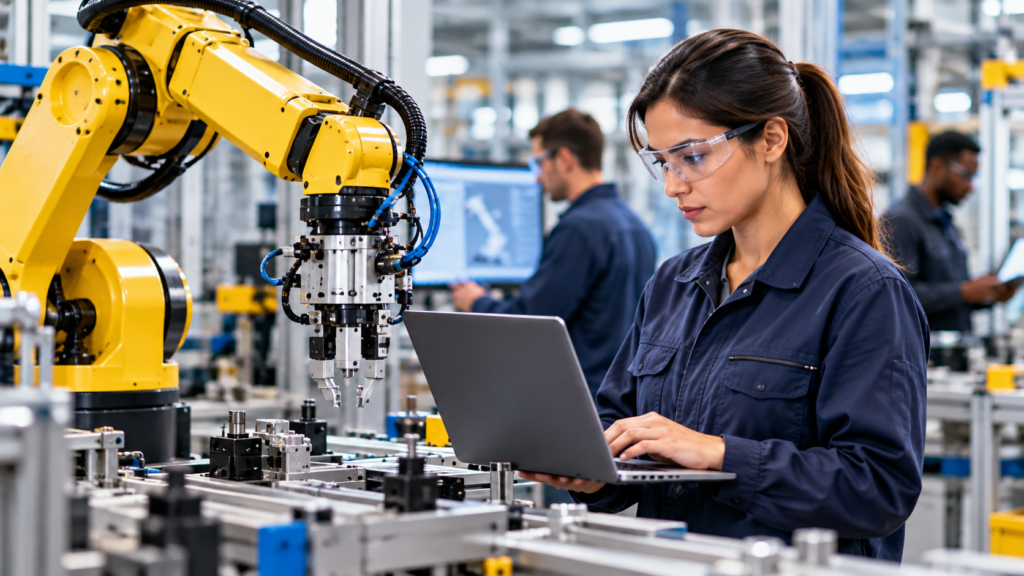
Robots are no longer limited to science-fiction stories or automobile assembly lines. They are increasingly used in warehouses, hospitals, manufacturing facilities, laboratories, agriculture, and other workplaces. As artificial intelligence becomes more capable, some robotic systems are also gaining new abilities to recognize objects, navigate changing environments, and perform more complex tasks.
These developments are creating opportunities for engineers, programmers, technicians, maintenance specialists, and workers who understand how automated systems operate. They are also raising important questions about which jobs may change, what skills employers will need, and how people can prepare.
You do not necessarily need a four-year engineering degree to begin working in robotics. Some career paths involve designing sophisticated machines, while others focus on installing equipment, maintaining automated systems, troubleshooting problems, or supporting daily operations.
This guide explores the different types of robotics careers, the qualifications employers may require, salary expectations, and practical ways to get started. Whether you are a student, an experienced worker, or someone considering a career change, the goal is to help you understand your options and decide what to learn next.
Table of Contents
What Is Robotics, and How Does AI Fit In?
Robotics is the field concerned with designing, building, programming, operating, and maintaining machines that can perform physical tasks. These machines may be controlled directly by people, follow programmed instructions, or use sensors and software to respond to their surroundings.
Artificial intelligence can expand what some robots are able to do. Traditional industrial robots often repeat carefully programmed movements in controlled environments. AI-enabled systems may use computer vision, machine learning, and other technologies to recognize objects, interpret sensor information, or adapt to certain changes in their environment.
However, not every robot uses AI, and not every AI system controls a robot. Understanding this distinction is important when evaluating career opportunities.
Traditional Robotics and Industrial Automation
Traditional industrial robots are widely used for repetitive or precisely controlled tasks such as welding, painting, assembling products, and moving materials.
These systems often operate within defined work areas and follow programmed sequences. They still require skilled people to install, program, monitor, maintain, and repair them.
For many workers, industrial automation provides a practical introduction to robotics because it connects directly to manufacturing, electrical systems, mechanical maintenance, and industrial technology.
AI-Enabled Robotics
AI-enabled robots may combine cameras, sensors, software, and machine learning to perform tasks that require greater flexibility.
For example, a warehouse robot may use sensors and navigation software to move around obstacles. A robotic picking system may use computer vision to identify items with different shapes and sizes.
These capabilities can create demand for professionals with skills in software development, data analysis, machine learning, electronics, mechanical systems, and robotics integration.
Humanoid Robots and Physical AI
Humanoid robots are designed with some physical characteristics resembling the human body, such as arms, hands, legs, or an upright structure.
Developers are exploring whether these machines can perform useful tasks in environments originally designed for people.
Physical AI is a broad term describing AI systems that interact with and act in the physical world. It may involve robotics, perception, motion planning, simulation, and learning from physical interactions.
Although humanoid robotics receives considerable attention, many applications remain experimental or limited in deployment. Readers should distinguish demonstrations and forecasts from proven, widely available employment opportunities.
Where Are Robots Being Used Today?
Robotics is not one industry. It is a collection of technologies used across many sectors, each with different equipment, operating requirements, and career opportunities.
Manufacturing and Industrial Production
Manufacturers use robots for welding, assembly, packaging, material handling, quality inspection, and other production activities.
Career opportunities include industrial robotics technicians, automation technicians, maintenance specialists, controls engineers, and manufacturing engineers.
Warehousing and Logistics
Warehouses and distribution centers use automated equipment to transport materials, sort packages, retrieve inventory, and assist with order fulfillment.
Some systems use mobile robots that navigate warehouse environments, while others rely on fixed conveyors, robotic arms, and automated storage systems.
Workers with experience in logistics, equipment maintenance, industrial technology, and software systems may find opportunities in this field.
Healthcare and Medical Technology
Healthcare robotics includes surgical assistance systems, rehabilitation devices, laboratory automation, and certain hospital transportation systems.
These technologies require professionals with expertise in engineering, medical equipment maintenance, software, safety procedures, and clinical workflows.
Not all healthcare robotics positions involve direct patient care. Some focus on equipment support, installation, technical service, or product development.
Agriculture and Food Production
Robotics is used in applications such as automated milking, precision spraying, crop monitoring, sorting, packaging, and experimental harvesting systems.
The opportunities vary considerably by crop, region, and technology. Relevant skills may include mechanical maintenance, sensors, electronics, computer vision, and agricultural equipment operation.
Transportation and Autonomous Systems
Robotics technologies are also involved in autonomous vehicles, drones, industrial inspection systems, and other machines that navigate or operate in physical environments.
These systems may require expertise in sensors, mapping, navigation, safety engineering, software, and equipment testing.
Some applications are already commercially established, while others face significant technical, regulatory, or operational limitations.
Small Businesses and Service Industries
Robotics is gradually entering selected service environments through cleaning machines, inspection devices, food-service automation, and other specialized equipment.
For small businesses, the important question is not whether robots are impressive, but whether they can perform a useful task safely, reliably, and economically.
This creates opportunities not only for robot manufacturers but also for installers, service technicians, equipment integrators, trainers, and consultants.
Careers in Robotics and Automation
A career in robotics does not always mean designing a robot from the ground up. Some professionals develop robotic systems, while others install equipment, program automated processes, maintain machinery, test performance, or help businesses use robotics effectively.
The qualifications vary considerably. Certain engineering and research positions generally require a bachelor’s degree or advanced education, while many technician and maintenance positions offer alternative entry routes.
Here are eight career paths worth exploring.
1. Robotics Technician
Robotics technicians help install, inspect, maintain, troubleshoot, and repair robotic equipment.
They may work with industrial robotic arms, automated production lines, sensors, motors, controllers, and related machinery.
Typical responsibilities: Diagnosing equipment problems, replacing components, performing preventive maintenance, assisting with robot programming, and supporting safe operations.
Skills to develop: Electrical fundamentals, mechanical systems, troubleshooting, industrial safety, robotics controls, and technical documentation.
Common entry pathways: Associate degrees, technical certificates, apprenticeships, or relevant industrial maintenance experience. Employer requirements vary.
Who might consider this career: People with hands-on mechanical or electrical interests, manufacturing experience, or a preference for practical technical work.
2. Automation Technician
Automation technicians maintain and troubleshoot the systems that allow equipment and production processes to operate automatically.
Their work may involve programmable logic controllers (PLCs), sensors, electrical circuits, motors, industrial networks, and automated machinery.
Typical responsibilities: Testing automated equipment, identifying faults, adjusting control systems, and supporting production operations.
Skills to develop: PLC fundamentals, electrical troubleshooting, industrial controls, sensors, equipment maintenance, and workplace safety.
Common entry pathways: Technical training, associate degrees, apprenticeships, and experience in industrial maintenance or electrical work.
Who might consider this career: Maintenance workers, electricians, manufacturing employees, and people interested in industrial technology.
3. Robotics Engineer
Robotics engineers help design, develop, integrate, and improve robotic systems.
Depending on the position, their work may focus on mechanical components, electronics, control systems, software, sensors, or the overall performance of a robot.
Typical responsibilities: Developing robotic designs, testing prototypes, solving engineering problems, and improving system reliability.
Skills to develop: Mathematics, mechanical or electrical engineering, programming, control systems, sensors, and systems integration.
Common entry pathways: A bachelor’s degree in mechanical engineering, electrical engineering, robotics, mechatronics, or a related field. Some research and advanced development positions require graduate education.
Who might consider this career: Students interested in engineering and experienced technical professionals who want to move into robotics design or development.
4. Robotics Software Developer
Robotics software developers create and maintain software that helps robots perform tasks, process sensor information, and interact with other systems.
Some work on motion control, navigation, perception, simulation, or communication between robotic components.
Typical responsibilities: Writing and testing software, debugging problems, integrating sensors, and improving robotic system performance.
Skills to develop: Python, C++, software engineering, Linux, robotics frameworks such as ROS 2, and relevant mathematics.
Common entry pathways: Computer science, software engineering, robotics education, or demonstrable programming experience. Requirements depend on the employer and the complexity of the work.
Who might consider this career: Software developers, computer science students, and technically inclined career changers.
5. Mechatronics Technician
Mechatronics combines mechanical systems, electronics, computer technology, and automated controls.
Mechatronics technicians work with equipment that brings these technologies together, including certain robotic and automated manufacturing systems.
Typical responsibilities: Installing, testing, maintaining, and repairing automated equipment and electromechanical systems.
Skills to develop: Mechanical systems, electronics, electrical measurements, industrial controls, troubleshooting, and technical communication.
Common entry pathways: Associate degrees, postsecondary certificates, apprenticeships, or relevant technical experience.
Who might consider this career: People who enjoy working with both machinery and electronics.
6. Controls Engineer
Controls engineers design and improve systems that regulate how machines and industrial processes operate.
In robotics and automation, they may work with PLCs, industrial controllers, motion systems, sensors, and equipment communication networks.
Typical responsibilities: Developing control strategies, programming industrial systems, testing equipment, and resolving performance or reliability problems.
Skills to develop: Electrical engineering, control theory, PLC programming, industrial networks, motion control, and systems integration.
Common entry pathways: A bachelor’s degree in electrical engineering, controls engineering, mechatronics, or a related discipline. Some professionals progress into controls roles from technical positions with additional training and experience.
Who might consider this career: Electrical engineering students, experienced automation technicians, and industrial technology professionals.
7. Robotics Field Service Technician
Field service technicians install, inspect, troubleshoot, and repair robotic equipment at customer locations.
Unlike technicians assigned to a single facility, these professionals may travel between manufacturing plants, warehouses, hospitals, or other workplaces.
Typical responsibilities: Equipment installation, scheduled maintenance, repairs, software or configuration updates, and customer training.
Skills to develop: Mechanical and electrical troubleshooting, technical communication, equipment documentation, customer service, and safety procedures.
Common entry pathways: Technical certificates, associate degrees, equipment maintenance experience, or employer-sponsored training.
Who might consider this career: Hands-on technical workers who enjoy solving problems and working with customers. Some positions require substantial travel.
8. Robotics Systems Integrator
Robotics systems integrators help connect robotic equipment with other machines, software, sensors, and workplace processes.
Systems integration may involve both engineering and technical implementation. Job titles and qualification requirements vary widely.
Typical responsibilities: Evaluating equipment requirements, connecting system components, testing robotic operations, troubleshooting integration problems, and supporting installation projects.
Skills to develop: Robotics fundamentals, automation systems, industrial communications, programming, troubleshooting, and project coordination.
Common entry pathways: Engineering degrees, automation or mechatronics training, and substantial experience working with industrial systems.
Who might consider this career: Experienced technicians, engineers, programmers, and professionals who enjoy understanding how complex systems work together.
Choosing the Right Robotics Career Path
The best robotics career depends on your interests, existing skills, educational background, and preferred working environment.
If you enjoy repairing equipment and solving hands-on problems, technician or maintenance positions may be worth investigating.
If you enjoy programming, robotics software development could be a better fit.
If you want to design machines or develop advanced robotic systems, an engineering pathway may be appropriate.
And if you already work in manufacturing, logistics, maintenance, or another technical field, your experience may provide a foundation for moving into automation or robotics-related work.
You do not need to decide on a specific job title immediately. Start by identifying which type of work interests you, then compare actual employer requirements with the skills you already possess.
Robotics Career Salaries and Job Outlook
Robotics careers can offer competitive salaries, but earnings vary widely depending on the occupation, experience, education, employer, industry, and location.
One important consideration is that robotics is not a single occupation. People working with robots may be classified as mechanical engineers, electrical engineers, software developers, industrial technicians, or other professionals.
For this reason, the following salary figures are based on related occupations reported by the U.S. Bureau of Labor Statistics (BLS). They are useful benchmarks, not guaranteed salaries for robotics-specific positions.
Robotics-Related Career Salary Examples
Electro-mechanical and Mechatronics Technologists and Technicians
The median annual wage was $73,900 in May 2025. These professionals may operate, test, maintain, and repair robotic or automated equipment.
Mechanical Engineers
The median annual wage was $104,110 in May 2025. Mechanical engineers may design robotic mechanisms, develop equipment, test prototypes, and help integrate automated systems.
Electrical Engineers
The median annual wage was $120,630 in May 2025. Electrical engineers may work on robotic control systems, sensors, motors, power systems, and electronic components.
Software Developers
The median annual wage was $135,980 in May 2025. Some software developers create applications involving robotics, machine control, navigation, perception, and automation.
These are nationwide occupational medians. Entry-level positions may pay substantially less, and experienced professionals in specialized positions may earn more.
What Is the Job Outlook for Robotics Careers?
The employment outlook differs among occupations connected to robotics.
According to BLS projections for 2025–2035:
- Employment of electro-mechanical and mechatronics technologists and technicians is projected to grow 3%.
- Employment of mechanical engineers is projected to grow 11%.
- Employment of electrical and electronics engineers is projected to grow 8%.
- Employment of software developers is projected to grow 10%.
These projections cover the entire occupations, not just positions involving robotics.
They should not be interpreted as forecasts that robotics employment itself will grow by those exact percentages.
How Automation Can Create and Change Jobs
Robotics and automation can influence employment in different ways.
Organizations adopting robotic equipment may need people who can install, maintain, repair, program, and integrate those systems.
At the same time, automation can reduce the amount of human labor required for certain repetitive tasks.
This means some jobs may expand, others may change significantly, and some responsibilities may be reduced or eliminated.
Workers who understand both their industry and the technologies being introduced may be better positioned to adapt.
For example, an experienced manufacturing employee who develops skills in industrial controls, equipment troubleshooting, or robotics maintenance may be able to pursue opportunities involving automated production systems.
However, additional training does not guarantee employment, and opportunities vary by region and employer.
How to Research Salaries in Your Area
National salary figures are a useful starting point, but they do not necessarily reflect local employment conditions.
Before investing in training or changing careers:
- Search for actual robotics and automation positions in your area.
- Compare job responsibilities rather than relying only on job titles.
- Review salary ranges when employers provide them.
- Identify the education, certifications, and experience employers request.
- Compare the cost of training with realistic entry-level earnings.
You can also use the BLS Occupational Outlook Handbook to research related occupations and explore employment information by state or metropolitan area.
The most useful career decision is based on both your interests and evidence of employment opportunities where you want to work.
Skills and Qualifications Employers Look For
Robotics combines several areas of knowledge, including mechanical systems, electronics, programming, automation, and problem-solving.
However, you do not need to master every subject to begin exploring robotics careers. The skills you need depend on the work you want to perform.
A robotics technician maintaining industrial equipment may need different qualifications from a software engineer developing navigation systems or an engineer designing robotic arms.
The most practical approach is to identify a career direction, understand its requirements, and develop relevant skills progressively.
Mechanical and Electrical Fundamentals
Many robotics systems combine motors, gears, sensors, electrical circuits, and mechanical components.
Understanding how these components work together can be valuable for technicians, engineers, and maintenance professionals.
Useful subjects include:
- Basic electricity and electronics
- Motors, actuators, and sensors
- Mechanical systems and power transmission
- Reading technical drawings and electrical diagrams
- Using measuring and diagnostic instruments
- Preventive maintenance and troubleshooting
People with experience in automotive repair, industrial maintenance, electrical work, or manufacturing may already possess some relevant knowledge.
Programming and Software Skills
Programming is important in many robotics careers, but the amount required varies.
Robotics software developers may write substantial amounts of code, while technicians may work primarily with equipment settings, industrial controllers, and manufacturer-specific programming interfaces.
Common technologies include:
- Python: Used in robotics education, automation, testing, and software development.
- C++: Common in performance-sensitive robotics software and control applications.
- Programmable Logic Controllers (PLCs): Used to control industrial machinery and automated processes.
- ROS 2 (Robot Operating System): An open-source collection of software tools and libraries for developing robotics applications.
- Linux: Used in many robotics development environments.
Beginners should not assume they need to learn all these technologies at once.
For industrial automation, PLC fundamentals may be a more useful starting point. For robotics software development, Python and introductory ROS 2 concepts may be appropriate.
Sensors, Control Systems, and Automation
Robots use sensors and control systems to monitor their surroundings and regulate movement.
Depending on the application, these systems may measure position, distance, speed, pressure, temperature, or other conditions.
Important concepts include:
- Sensors and feedback
- Motor control and motion systems
- Industrial automation
- PLC programming
- Control system fundamentals
- Equipment calibration and testing
These skills are particularly relevant to automation technicians, controls engineers, robotics technicians, and systems integrators.
Artificial Intelligence and Computer Vision
Some advanced robotics applications use artificial intelligence to interpret sensor data, recognize objects, plan movements, or adapt to changing conditions.
Professionals working on these systems may benefit from understanding:
- Machine learning fundamentals
- Computer vision
- Image and sensor processing
- Data preparation and evaluation
- Robot navigation and motion planning
- Testing and validating AI-enabled systems
These subjects are especially relevant to robotics software development, research, and advanced engineering positions.
However, many industrial robotics jobs do not require expertise in machine learning.
Mathematics and Engineering Principles
The mathematical knowledge required depends on the position.
Technicians often use practical mathematics, measurements, and basic electrical calculations.
Engineers and software developers may need more advanced knowledge of algebra, geometry, trigonometry, calculus, linear algebra, physics, and control theory.
You do not necessarily need advanced mathematics to begin learning about robotics. Start with the requirements of your intended career path.
Robotics Safety and Responsible Operation
Safety is a fundamental part of working with robotic equipment.
Industrial robots can create hazards involving unexpected movement, electrical energy, moving machinery, and interactions between people and automated systems.
Workers may need training in:
- Recognizing robotic equipment hazards
- Machine guarding and protective devices
- Emergency procedures
- Lockout/tagout and hazardous energy control
- Safe maintenance and inspection practices
- Following manufacturer instructions and workplace procedures
Training requirements depend on the equipment, job responsibilities, and applicable safety rules.
Beginners should use appropriate educational environments or simulations rather than attempting potentially hazardous work on industrial equipment without qualified supervision.
Troubleshooting and Problem-Solving
Robotic systems involve interacting mechanical, electrical, and software components.
When something goes wrong, workers must determine the likely cause rather than simply replacing parts or changing settings at random.
Valuable abilities include observing equipment behavior, interpreting error messages, reviewing technical documentation, testing possible causes, and recording results.
Troubleshooting is particularly important for technicians, maintenance specialists, and field service professionals.
Communication, Teamwork, and Documentation
Robotics projects often involve people from different technical backgrounds.
Engineers, programmers, technicians, equipment operators, managers, and customers may all participate in developing or operating an automated system.
Employers may value people who can explain technical problems clearly, document maintenance activities, follow procedures, train coworkers, and coordinate work across teams.
These abilities can be especially useful for experienced workers transitioning from other industries.
Which Existing Skills Can Transfer Into Robotics?
You may already have relevant experience even if you have never held a robotics-related job.
For example:
Manufacturing workers may understand production processes, quality control, equipment operation, and workplace safety.
Electricians and maintenance technicians may have experience with electrical systems, motors, diagnostic tools, and troubleshooting.
Software developers may bring programming, testing, debugging, and systems integration skills.
Warehouse and logistics workers may understand material handling, inventory movement, automated workflows, and operational challenges.
Automotive technicians may have experience with mechanical systems, electronics, sensors, and diagnostic equipment.
Supervisors and trainers may contribute communication, documentation, operational coordination, and employee training skills.
Transferable experience does not automatically qualify someone for a robotics position. Additional technical training or supervised experience may still be necessary.
However, recognizing your existing strengths can help you choose a more realistic and affordable learning pathway.
How to Identify Your Robotics Skills Gap
Before enrolling in an expensive training program, take these steps:
- Choose two or three robotics-related job titles that interest you.
- Review actual employer job descriptions.
- Identify the qualifications that appear repeatedly.
- Compare those requirements with your existing education and experience.
- Separate essential qualifications from preferred qualifications.
- Select one or two missing skills to develop first.
- Look for affordable courses, community college programs, apprenticeships, or supervised practical experience.
The goal is not to learn everything about robotics. It is to build the skills that move you toward a realistic career opportunity.
As you progress, revisit employer requirements and adjust your learning plan.
Robotics Careers Without a Four-Year Degree
You do not necessarily need a bachelor’s degree to begin a career working with robotics or automated equipment.
Although advanced engineering and robotics research positions often require university education, many technician, maintenance, installation, and equipment-support roles offer alternative entry pathways.
These pathways may include community college programs, technical certificates, apprenticeships, military technical training, employer-sponsored instruction, and relevant work experience.
The right choice depends on the occupation, employer requirements, local opportunities, and your existing skills.
Start With Robotics and Automation Technician Positions
Robotics technicians and automation technicians are worth investigating if you enjoy hands-on technical work.
These positions may involve installing equipment, inspecting components, diagnosing faults, performing preventive maintenance, and helping automated systems operate reliably.
Employers may look for training or experience involving electrical systems, mechanical equipment, sensors, industrial controls, and workplace safety.
An associate degree or technical certificate can provide a useful foundation, but some employers also consider relevant maintenance or industrial experience.
Explore Mechatronics and Industrial Maintenance
Mechatronics combines mechanical technology, electronics, and automated controls.
Community colleges and technical schools may offer programs in mechatronics, electromechanical technology, industrial maintenance, or automation.
These programs can introduce students to subjects such as motors, electrical circuits, programmable logic controllers, mechanical systems, and troubleshooting.
Industrial maintenance can also provide an entry point into workplaces that use robotic equipment.
For example, someone who begins maintaining conveyors, motors, and production equipment may later receive additional training to work with robotic systems.
Consider Apprenticeships and Employer Training
Apprenticeships combine paid work experience with structured instruction.
Depending on the occupation and region, apprenticeship opportunities may exist in industrial maintenance, mechatronics, electrical work, and related technical fields.
Some employers also provide equipment-specific training for employees who already have relevant experience.
An apprenticeship is not automatically available for every robotics occupation, and admission requirements vary.
However, these programs are worth investigating because they may allow participants to develop practical skills while earning wages.
Build on Experience You Already Have
If you have worked in manufacturing, maintenance, transportation, logistics, automotive repair, or electrical trades, you may already understand important aspects of automated workplaces.
For example, experience diagnosing mechanical problems, following safety procedures, operating equipment, or maintaining electrical systems may be relevant.
The next step is to identify what additional training employers require for positions involving robotics.
This approach may be more practical than starting an entirely new educational program without first considering your existing qualifications.
Look for Affordable Training Before Expensive Programs
Before paying for a robotics course or certification, compare several options.
Community colleges, public workforce development programs, registered apprenticeships, and employer training may offer practical instruction at different price levels.
Free or low-cost introductory resources can also help you decide whether the field interests you.
When evaluating a training program, ask:
- Does it teach skills requested in actual job postings?
- Does it include practical exercises or supervised equipment experience?
- Are the instructors familiar with current industrial technology?
- Does it prepare students for a recognized qualification or an identifiable occupation?
- What is the total cost, including equipment, books, and examination fees?
- Does the program provide credible information about completion rates and employment outcomes?
Avoid assuming that an expensive certificate guarantees a robotics job.
A Practical Starting Plan Without a Bachelor’s Degree
If you’re interested in entering robotics through a technical pathway, consider this sequence:
Step 1: Identify local opportunities. Search for robotics technician, automation technician, mechatronics technician, industrial maintenance technician, and field service technician positions.
Step 2: Compare employer requirements. Identify common qualifications, including electrical fundamentals, mechanical troubleshooting, PLCs, and safety training.
Step 3: Assess your existing experience. Determine which skills you already possess and which need development.
Step 4: Explore training options. Compare community colleges, technical programs, apprenticeships, and employer-sponsored instruction.
Step 5: Gain practical experience. Where possible, use supervised training, appropriate educational equipment, or safe simulation environments to develop hands-on skills.
Step 6: Apply for suitable entry-level opportunities. Look for positions where your qualifications match the essential requirements, including maintenance and automation roles that may lead toward more specialized robotics work.
A four-year degree can open additional career opportunities, particularly in engineering and research. But it is not the only way to participate in the growing use of robotics and automation.
The best pathway is the one that connects your interests and existing strengths with realistic employer requirements.
How to Transition Into a Robotics Career
Changing careers does not always mean starting over. Many people already possess skills that can help them move toward robotics, automation, or related technical work.
Manufacturing employees, electricians, maintenance technicians, software developers, automotive technicians, and logistics professionals may have experience that applies to robotic systems.
The challenge is identifying where that experience fits, what additional qualifications employers require, and which opportunities offer a realistic starting point.
A successful transition usually begins with understanding the work rather than immediately enrolling in an expensive training program.
Step 1: Identify Your Most Relevant Experience
Begin by reviewing your existing skills and work responsibilities.
Consider whether you have experience with:
- Mechanical equipment and maintenance
- Electrical systems or electronic components
- Computer programming or software troubleshooting
- Manufacturing operations and quality control
- Warehouse equipment and logistics processes
- Equipment installation, testing, or repair
- Technical documentation and workplace safety
- Training employees or coordinating technical projects
These abilities may provide a foundation for robotics-related work.
For example, someone experienced in industrial maintenance may already understand motors, mechanical components, preventive maintenance, and troubleshooting.
A software developer may be familiar with programming, debugging, testing, and system integration.
The goal is to recognize relevant experience without assuming that it automatically qualifies you for a specialized robotics position.
Step 2: Choose a Realistic Entry Point
Robotics includes many occupations, and some transitions are easier than others.
A manufacturing maintenance worker might investigate automation technician or robotics maintenance positions.
An electrician might explore industrial controls, PLC programming, or automated equipment installation.
A software developer could investigate robotics software development, simulation, or systems integration.
A logistics professional might consider technical or operational roles involving warehouse automation.
An experienced engineer may be able to move toward robotics through additional training in control systems, sensors, or robotic applications.
Select two or three possible job titles and compare their requirements before deciding on a training pathway.
Step 3: Study Actual Employer Requirements
Job advertisements can provide useful evidence about what employers expect.
Look for repeated requirements across several relevant positions rather than relying on a single posting.
Pay attention to:
- Required education and technical training
- Specific equipment or programming experience
- Electrical, mechanical, or software knowledge
- Industry certifications
- Safety requirements
- Experience with industrial controls or automation
- Travel, shift schedules, and physical job requirements
Distinguish essential qualifications from preferred qualifications.
Some employers may be willing to train candidates who already have strong related experience. Others require specialized knowledge before hiring.
Step 4: Close One Skills Gap at a Time
Once you’ve identified the most important missing qualifications, create a manageable learning plan.
For example:
Industrial maintenance to robotics technician: Build familiarity with robotic controllers, sensors, automated systems, and equipment-specific safety procedures.
Electrician to automation technician: Study PLC fundamentals, industrial networks, control systems, and troubleshooting automated equipment.
Software developer to robotics programmer: Explore Python or C++ robotics applications, ROS 2, simulation, and sensor integration.
Manufacturing employee to mechatronics technician: Investigate technical training in electronics, mechanical systems, electrical measurements, and industrial controls.
Avoid trying to learn every robotics technology simultaneously.
Choose skills that appear repeatedly in positions you would realistically consider.
Step 5: Gain Practical Experience
Employers often value evidence that applicants can apply technical knowledge to real problems.
Depending on your intended career, useful experience might include:
- Completing supervised technical training
- Working with educational robotics equipment
- Practicing programming in simulation environments
- Participating in appropriate robotics projects
- Completing an apprenticeship
- Assisting with automation projects at work when authorized
- Documenting troubleshooting or maintenance experience
For software-oriented roles, a small portfolio of well-documented robotics projects may help demonstrate relevant abilities.
For hands-on industrial positions, supervised equipment experience and safety training may be especially important.
Never experiment with industrial robots or automated machinery without proper authorization, safeguards, and qualified supervision.
Step 6: Update Your Resume for Robotics Opportunities
When preparing a resume, emphasize experience that relates directly to the employer’s requirements.
Instead of listing only previous job titles, explain relevant responsibilities and accomplishments.
For example, a maintenance technician might describe experience diagnosing equipment faults, performing preventive maintenance, interpreting technical diagrams, or reducing equipment downtime.
A software developer might emphasize programming, debugging, testing, documentation, and integration work.
Use accurate descriptions and measurable accomplishments when available.
Do not claim robotics experience or technical qualifications you have not actually obtained.
The objective is to help employers recognize how your existing skills apply to the position.
Step 7: Consider a Gradual Career Transition
You may not need to leave your current occupation immediately.
Some workers can gain exposure to automation through existing employers, cross-training, equipment maintenance responsibilities, or internal technical opportunities.
Others may begin with a related technician or support position before pursuing more specialized robotics work.
A gradual transition can provide time to develop skills, understand workplace requirements, and evaluate whether the new career fits your interests.
Before making a major financial or employment decision, consider the cost of training, local job availability, expected earnings, work schedules, and your personal circumstances.
Build a Career Transition Plan You Can Actually Follow
A practical plan should answer five questions:
- Which robotics-related occupation interests me most?
- What relevant skills and experience do I already have?
- Which qualifications do employers require that I currently lack?
- What is the most affordable credible way to develop those qualifications?
- What action can I take within the next 30 days?
Your first step might be researching three local employers, speaking with a community college adviser, exploring a registered apprenticeship, or completing an introductory robotics course.
Small, well-chosen actions can help you evaluate the field before committing substantial time or money.
Robotics offers multiple career pathways, but the right transition depends on your background, interests, and available opportunities. A realistic plan connects what you already know with the work you want to pursue next.
Robotics Training, Certifications, and Learning Resources
Learning robotics does not have to begin with an expensive degree, specialized equipment, or a costly certification program.
There are several ways to explore robotics, including free online tutorials, community college programs, apprenticeships, manufacturer training, and university education.
The best choice depends on your career goal, previous experience, and the qualifications employers expect.
Before paying for training, identify the type of robotics work you want to pursue and compare several relevant job postings.
Free Robotics Learning Resources
Free introductory resources can help you understand robotics fundamentals before committing to a formal program.
Universal Robots Academy
Universal Robots provides free online training covering collaborative robot operation, programming, and related applications.
Its interactive learning modules can introduce beginners to robot programming concepts without requiring immediate access to industrial equipment.
Website: https://academy.universal-robots.com/free-e-learning/
ROS 2 Documentation and Tutorials
ROS 2 is an open-source software framework widely used in robotics development.
Its official documentation includes tutorials covering robotics software concepts, communication between components, programming, and development tools.
ROS 2 is particularly relevant to people interested in robotics software engineering, research, and advanced robotic systems.
Website: https://docs.ros.org/en/rolling/
Community Colleges and Public Training Resources
Many community colleges offer introductory courses in electronics, industrial automation, mechatronics, mechanical technology, and programming.
Some institutions also provide continuing education or workforce training programs.
Course availability and tuition vary, so compare local programs before enrolling.
Community College and Technical School Programs
Community colleges and technical schools can provide structured training for technician and maintenance careers.
Relevant program names may include:
- Mechatronics Technology
- Industrial Automation
- Robotics Technology
- Electromechanical Technology
- Industrial Maintenance
- Electrical Engineering Technology
- Manufacturing Technology
A strong program should teach skills that correspond to actual employer requirements.
For hands-on technical careers, look for appropriate laboratory instruction, supervised equipment experience, safety training, and opportunities to practice troubleshooting.
An associate degree or technical certificate may be sufficient for some positions, while others require additional experience or qualifications.
Robotics and Automation Apprenticeships
Registered apprenticeships combine paid work experience with structured instruction.
Depending on the occupation and location, opportunities may be available in mechatronics, industrial maintenance, electrical systems, and related technical fields.
Apprenticeship.gov provides a searchable resource for finding opportunities and learning about registered apprenticeship programs.
Website: https://www.apprenticeship.gov/apprenticeship-job-finder
Search for relevant occupations as well as the word robotics. An industrial maintenance or mechatronics apprenticeship may provide valuable preparation for working with automated equipment.
Manufacturer Training Programs
Some robotics manufacturers provide training on their equipment and software.
These programs can be useful when employers in your area use particular robotic systems.
FANUC Robotics Training
FANUC offers industrial robotics training covering areas such as robot programming, equipment maintenance, and advanced applications.
Its educational programs also work with participating schools and training institutions.
Website: https://www.fanucamerica.com/education
Universal Robots Training
In addition to free online lessons, Universal Robots offers instructor-led training and other learning opportunities.
These resources may be useful for people interested in collaborative robots and industrial automation.
Website: https://docs.ros.org/en/lyrical/index.html
Manufacturer training can provide valuable equipment-specific knowledge. However, completing a manufacturer’s course does not automatically qualify someone for every robotics position.
Robotics Certifications: What Should You Look For?
Certifications can help demonstrate knowledge or proficiency, but their value depends on the occupation, employer, and credential.
Some programs focus on general automation knowledge, while others assess proficiency with specific equipment.
For example, FANUC supports robotics and advanced automation certifications through educational and assessment partnerships.
Before pursuing a certification, investigate whether employers actually request or recognize it.
Also distinguish between:
- Course completion certificates: Documents showing that you completed a training course.
- Industry certifications: Credentials awarded through a defined assessment or certification process.
- Academic certificates: Postsecondary programs that provide structured education and may award academic credit.
- Licenses: Government-issued authorizations required for certain regulated work, where applicable.
These qualifications are not interchangeable.
A certificate may be useful, but it should not be treated as a guarantee of employment or professional competence.
University Degrees and Advanced Robotics Education
A bachelor’s degree is commonly required for many robotics engineering, electrical engineering, mechanical engineering, and advanced software development positions.
Relevant degree programs may include:
- Mechanical Engineering
- Electrical Engineering
- Computer Engineering
- Computer Science
- Robotics Engineering
- Mechatronics Engineering
Some research and specialized development positions require graduate education.
When comparing degree programs, examine the curriculum, laboratory facilities, project opportunities, internship connections, accreditation where relevant, and total cost.
A program labeled robotics is not necessarily better than a strong mechanical engineering, electrical engineering, or computer science program with relevant robotics coursework.
How to Evaluate a Robotics Training Program
Before enrolling, consider the following questions:
- Does the program prepare students for a specific occupation or identifiable skills?
- Do local employers request the technologies being taught?
- Does the program include practical training appropriate to the career?
- Are the instructors qualified and experienced?
- What credential will you receive?
- Is that credential recognized by relevant employers?
- What is the total cost, including equipment, books, examinations, and transportation?
- Does the provider publish credible completion and employment outcome information?
Be cautious of programs promising guaranteed employment, unusually high salaries, or rapid advancement without substantial training.
A Low-Cost Robotics Learning Path
If you are just beginning, consider this approach:
First: Learn the basic differences between industrial robotics, automation, mechatronics, and AI-enabled robotics.
Second: Choose a career direction based on your interests and existing skills.
Third: Use free introductory lessons to determine whether you enjoy the subject.
Fourth: Review real job postings and identify recurring qualifications.
Fifth: Compare affordable local training options, apprenticeships, and employer-sponsored programs.
Sixth: Pursue more advanced education or certifications only when they support a realistic career goal.
The objective is not to collect as many credentials as possible. It is to develop useful, demonstrable skills that employers value.
Humanoid Robots, Physical AI, and the Future of Work
Robotics is entering an important period of development as advances in artificial intelligence, sensors, computing, and mechanical engineering make new applications possible.
Some of the most widely discussed developments involve humanoid robots, machines that can learn from experience, and AI systems designed to interact with the physical world.
These technologies could eventually change how work is performed in manufacturing, logistics, healthcare, construction, and service industries.
However, it is important to distinguish between what robots can demonstrate under controlled conditions and what they can perform safely, reliably, and economically in real workplaces.
What Are Humanoid Robots?
Humanoid robots are machines designed with some physical characteristics resembling the human body.
They may have arms, hands, legs, an upright body, or other features intended to help them operate in environments designed for people.
Developers are investigating whether humanoid robots can perform tasks such as moving materials, handling objects, inspecting equipment, or assisting with certain workplace activities.
A potential advantage of a humanoid design is that it may allow robots to use existing tools, pathways, and workspaces without requiring every facility to be redesigned.
However, humanoid robots face significant engineering challenges.
Walking, balancing, manipulating unfamiliar objects, operating safely near people, and maintaining reliable performance over long periods are difficult tasks.
Humanoid designs are also not necessarily the best solution for every application. A specialized industrial robot may perform a particular task more efficiently, reliably, or economically.
What Is Physical AI?
Physical AI refers broadly to artificial intelligence systems that perceive, reason about, and act within the physical world.
Unlike AI applications that primarily generate text, images, or other digital outputs, physical AI must interact with objects, movement, forces, and changing environments.
A robotic system using physical AI may combine several technologies:
- Computer vision to interpret camera images
- Sensors to measure movement, distance, and physical conditions
- Machine learning to recognize patterns or support decisions
- Motion planning to determine how a robot should move
- Control systems to carry out movements
- Simulation to test behavior before physical deployment
These capabilities may help robots perform tasks in less predictable environments.
However, AI does not eliminate the need for mechanical engineering, safety systems, testing, or human oversight.
How Are Robots Learning New Tasks?
Traditional industrial robots often follow carefully programmed instructions.
Some newer robotic systems use machine learning, demonstrations, simulation, and other methods to develop or improve task performance.
For example, researchers may train a robot to recognize objects, grasp items, or navigate environments using information collected from demonstrations or simulated experiences.
Simulation can allow developers to test large numbers of situations without repeatedly operating physical equipment.
Nevertheless, successful performance in a simulation does not guarantee equally reliable behavior in a real workplace.
Differences in lighting, object shapes, equipment conditions, unexpected obstacles, and human activity can create problems.
Robotic systems must be tested under realistic operating conditions before being relied upon for important tasks.
Where Might Humanoid Robots Be Used?
Potential applications include manufacturing, warehousing, material handling, inspection, and selected service activities.
Developers are particularly interested in tasks that occur in environments originally designed for human workers.
For example, a humanoid robot might eventually move materials between workstations or handle objects using existing workplace equipment.
However, many proposed applications remain experimental, limited to pilots, or dependent on carefully controlled conditions.
It is too early to assume that humanoid robots will become practical replacements for large numbers of workers across every industry.
Their adoption will depend on reliability, safety, cost, maintenance, energy requirements, and whether they provide an advantage over existing automation.
Will Robotics Replace Human Jobs?
Robotics can replace or reduce some tasks performed by people, especially when those tasks are repetitive, physically demanding, or suitable for automation.
However, automating a task is not necessarily the same as eliminating an entire occupation.
Many jobs involve a combination of physical activities, judgment, communication, troubleshooting, coordination, and responsibility.
Automation may change how those responsibilities are divided between people and machines.
Some positions may require fewer workers, while other roles may emerge or expand around equipment maintenance, programming, installation, safety, supervision, and systems integration.
The overall employment effects will vary by industry, occupation, region, and the speed of technology adoption.
Workers should take these changes seriously without assuming that every prediction about widespread job replacement will occur.
What New Skills Could Become More Valuable?
As robotics technology develops, employers may need people who can work across traditional technical boundaries.
Potentially valuable areas include:
- Robotics maintenance and troubleshooting
- Industrial automation and control systems
- Computer vision and machine learning
- Robotics software development
- Sensor integration and motion control
- Equipment safety and risk assessment
- Human-robot interaction
- Systems testing and reliability
- Technical training and workplace implementation
Not every worker will need advanced AI expertise.
In many workplaces, understanding how to operate, maintain, troubleshoot, or safely coordinate with automated systems may be more immediately useful.
How Should Workers Prepare for an Uncertain Future?
The most practical response to robotics developments is not to predict exactly which machines will become successful.
Instead, focus on skills that remain useful across multiple technologies and industries.
For technically inclined workers, these may include electrical systems, mechanical troubleshooting, programming, automation, and equipment maintenance.
For other professionals, valuable abilities may include problem-solving, process improvement, technical communication, safety awareness, and learning to work with new systems.
Consider following developments in your industry, reviewing changing employer requirements, and developing one relevant skill at a time.
Avoid making expensive education or career decisions based solely on promotional demonstrations or speculative forecasts.
Robotics and physical AI may create significant changes in the workplace, but the timing and extent of those changes remain uncertain.
The best preparation is a combination of practical knowledge, adaptable skills, and a willingness to keep learning.
Advantages and Challenges of Working in Robotics
Robotics can offer rewarding career opportunities for people who enjoy technology, problem-solving, and working with systems that interact with the physical world.
However, robotics careers also involve challenges. Some positions require extensive technical education, while others involve physically demanding work, irregular schedules, or responsibility for complex equipment.
Understanding both the advantages and challenges can help you decide whether this field is a good fit.
Advantages of a Robotics Career
Opportunities Across Multiple Industries
Robotics and automation are used in manufacturing, logistics, healthcare, agriculture, transportation, and other industries.
This variety can provide opportunities to apply technical skills in different work environments.
However, job availability depends on the occupation, employer, and region.
A Variety of Educational Pathways
Some robotics careers require engineering degrees or advanced education, while others may be accessible through technical certificates, associate degrees, apprenticeships, or relevant work experience.
This gives people with different educational backgrounds opportunities to investigate the field.
Practical and Technical Problem-Solving
Many robotics professionals work on tangible problems involving machines, sensors, software, and automated processes.
For people who enjoy diagnosing problems, improving equipment, or developing practical solutions, this can be satisfying work.
Opportunities to Develop Transferable Skills
Skills involving electronics, mechanical systems, programming, industrial controls, troubleshooting, and technical communication can be useful beyond robotics.
These abilities may also apply to manufacturing, equipment maintenance, engineering, and other technical occupations.
Participation in Developing Technologies
Robotics continues to evolve as advances in artificial intelligence, sensors, software, and engineering enable new applications.
Some professionals may have opportunities to work with emerging technologies or help organizations adopt new automated systems.
However, not every robotics position involves advanced AI or experimental robots. Many jobs focus on established industrial equipment.
Challenges of a Robotics Career
Technical Learning Requirements
Robotics combines multiple technical disciplines.
Depending on the position, workers may need knowledge of electrical systems, mechanical components, programming, mathematics, and automation.
Developing these skills takes time, and some occupations require substantial formal education.
Continuous Learning
Robotic equipment, software, and industry practices change over time.
Workers may need additional training to maintain equipment, learn new programming systems, or meet changing employer requirements.
Workplace Safety Responsibilities
Robotic equipment can involve moving machinery, electrical hazards, stored energy, and other safety risks.
Technicians, engineers, and operators must follow appropriate safety procedures and receive training relevant to their responsibilities.
Potentially Demanding Work Conditions
Some robotics technicians and field service professionals work in factories, warehouses, or customer facilities.
Depending on the position, work may involve standing, lifting, travel, shift schedules, or responding to equipment problems outside regular working hours.
Other robotics occupations, such as software development and engineering design, may involve more office-based work.
Different Employment Prospects Across Occupations
Robotics is not a single job category.
Demand for maintenance technicians, software developers, engineers, and research specialists may differ considerably.
Growth in robotics technology does not guarantee strong employment growth for every related occupation.
Cost of Education and Specialized Training
Some training programs, certifications, and degree pathways can be expensive.
Before investing, compare costs with local job opportunities, employer requirements, and realistic earnings.
Is a Robotics Career Right for You?
A robotics-related career may be worth exploring if you enjoy learning how systems work, solving technical problems, and applying knowledge to practical challenges.
You may also find the field interesting if you already have experience in manufacturing, maintenance, electrical work, software development, or engineering.
Before making a decision, consider:
- Do I prefer hands-on technical work, programming, engineering design, or another type of role?
- Am I willing to develop the mathematics or technical knowledge required?
- What relevant skills do I already possess?
- Are suitable opportunities available in my preferred location?
- What training would I need, and what would it cost?
- Would the expected working conditions fit my circumstances?
You do not have to commit to a new career immediately.
Exploring introductory training, reviewing actual job postings, and speaking with people who work in related occupations can help you make a more informed decision.
The best robotics career is not necessarily the most advanced or highest-paying position. It is one that fits your interests, abilities, goals, and circumstances.
How to Get Started
If robotics interests you, the next step is to turn that interest into a practical plan.
You do not need to purchase expensive equipment, enroll in a degree program, or make an immediate career change to begin exploring the field.
A useful starting approach is to identify your interests, investigate real opportunities, and build relevant knowledge gradually.
Step 1: Decide Which Type of Robotics Work Interests You
Robotics includes several different career directions.
You might prefer:
- Hands-on technical work: Installing, maintaining, repairing, or troubleshooting robotic equipment.
- Engineering and design: Developing mechanical, electrical, or integrated robotic systems.
- Software and programming: Creating programs that control robotic behavior, process sensor information, or support automation.
- Industrial automation: Working with robotic equipment, programmable logic controllers, and manufacturing systems.
- AI and advanced robotics: Exploring computer vision, machine learning, autonomous systems, or robotics research.
You do not need to choose a permanent career direction immediately.
Start by identifying one or two areas that interest you most.
Step 2: Research Jobs in Your Area
Search for robotics-related positions using several job titles rather than searching only for robotics engineer.
Useful search terms include robotics technician, automation technician, mechatronics technician, industrial maintenance technician, controls engineer, and robotics software developer.
Review several job descriptions and record the qualifications that appear most frequently.
Pay particular attention to education, technical skills, experience requirements, location, and working conditions.
This will help you distinguish interesting possibilities from realistic opportunities.
Step 3: Compare Your Existing Skills With Employer Requirements
Review the skills and experience you already possess.
If you have worked with mechanical equipment, electrical systems, computers, manufacturing processes, or technical troubleshooting, some of that experience may be relevant.
Compare your background with the requirements of your preferred positions.
Identify two or three important skills that you need to develop rather than trying to master every subject in robotics.
Step 4: Begin With Accessible Learning Resources
Use introductory lessons to explore the technical foundations of your chosen career direction.
Depending on your interests, this may involve learning about mechanical systems, basic electronics, industrial automation, programming, or robotics software.
Free online tutorials and community college introductory courses can help you evaluate whether you enjoy the subject.
If you are considering a hands-on career, look for supervised training that provides experience with appropriate equipment and safety procedures.
Step 5: Build Evidence of Your Abilities
As you learn, document what you accomplish.
For software-related careers, this might include small programming projects, simulations, or technical documentation.
For technician-oriented careers, relevant evidence may include completed training, supervised laboratory work, apprenticeships, or documented equipment maintenance experience.
Keep a record of the skills you develop and the problems you learn to solve.
This information may eventually support your resume, job applications, or discussions with employers.
Step 6: Explore Entry-Level and Related Opportunities
Your first position may not have robotics in its job title.
Related opportunities in industrial maintenance, manufacturing technology, electrical systems, equipment service, and automation can provide useful experience.
Some employers also offer internal training or advancement opportunities.
Evaluate each position based on the skills you could develop, the employer’s requirements, and whether it moves you toward your longer-term goal.
Step 7: Review Your Progress and Adjust Your Plan
After several weeks of exploration, ask yourself:
- Which robotics career interests me most?
- What have I learned about the work?
- Which skills have I begun developing?
- What qualifications do local employers expect?
- Is further training worth the cost?
- What should I do next?
Your interests may change as you learn more.
That is a useful outcome, not a failure. Exploring the field before making a major commitment can help you avoid unnecessary expenses and choose a better-fitting career direction.
Your First 30 Days: A Simple Robotics Career Exploration Plan
Week 1 — Explore the Field
Read about several robotics occupations and identify two career directions that interest you.
Week 2 — Investigate Employers
Review at least five relevant job postings. Record the most common skills, education requirements, and working conditions.
Week 3 — Try Introductory Training
Complete a beginner lesson or introductory project related to your preferred career direction.
Week 4 — Choose Your Next Step
Decide whether to continue self-study, investigate a community college program, explore apprenticeships, speak with a potential employer, or pursue another relevant learning opportunity.
At the end of the month, you should have a clearer understanding of the field and a more informed basis for deciding whether to continue.
You do not need to become a robotics expert in 30 days. The goal is to replace uncertainty with practical knowledge and a realistic next step.
Frequently Asked Questions About Robotics Careers
Is robotics a good career choice?
Robotics can be a rewarding career for people interested in technology, engineering, programming, automation, or hands-on problem-solving.
Opportunities exist in manufacturing, logistics, healthcare, and other industries. However, employment prospects vary by occupation, location, experience, and qualifications.
Before choosing a career, investigate actual job openings and training requirements in your area.
Can I work in robotics without a college degree?
Yes. Some robotics-related positions, particularly technician, maintenance, and equipment-support roles, may be accessible through technical education, apprenticeships, or relevant work experience.
However, many robotics engineering and advanced software development positions require bachelor’s degrees or additional education.
The appropriate pathway depends on the specific occupation and employer.
What is the easiest way to get started in robotics?
A practical starting point is to explore introductory robotics lessons, identify a career that interests you, and compare the qualifications requested in real job postings.
If you enjoy hands-on work, consider investigating mechatronics, industrial maintenance, or automation technician programs.
If you prefer software, introductory programming and robotics simulation may be useful starting points.
The easiest pathway depends on your existing skills and interests.
Do I need to know programming to work in robotics?
Not every robotics position requires advanced programming skills.
Some technician and maintenance positions emphasize mechanical systems, electrical troubleshooting, equipment operation, and industrial safety.
However, programming knowledge can be valuable, especially for robotics software development, industrial controls, systems integration, and advanced automation.
Python, C++, and programmable logic controller programming are examples of skills relevant to certain robotics occupations.
How much do robotics professionals earn?
Earnings depend on the occupation, education, experience, employer, and location.
Because robotics spans multiple occupations, there is no single salary figure that accurately represents every robotics career.
The salary section of this guide provides Bureau of Labor Statistics information for several related occupations, including mechatronics technicians, mechanical engineers, electrical engineers, and software developers.
These are occupation-wide figures, not salaries specific to robotics positions.
Will artificial intelligence replace robotics jobs?
AI and automation may change or eliminate some tasks, but they may also create demand for workers who develop, install, maintain, test, and supervise automated systems.
The effects will differ across industries and occupations.
Rather than assuming that every robotics job will disappear or that every robotics career will grow, workers should monitor changing employer requirements and continue developing useful skills.
Are humanoid robots creating new career opportunities?
Humanoid robots are an active area of research and commercial development.
Their development may create opportunities in engineering, software, sensors, control systems, testing, maintenance, and related fields.
However, many proposed applications remain experimental or limited in scale.
It is important to evaluate current employer demand rather than choosing a career solely on predictions about future humanoid robot adoption.
What certifications are useful for robotics careers?
Useful certifications depend on the occupation and equipment involved.
Manufacturer training, industrial automation credentials, technical certificates, and relevant apprenticeship qualifications may support certain career paths.
Before paying for a certification, check whether employers in your preferred field recognize or request it.
Completing a course does not automatically guarantee employment.
How long does it take to learn robotics?
The time required depends on what you want to accomplish.
Learning introductory robotics concepts may take weeks or months of consistent study.
Preparing for a technician position may require a structured technical program, apprenticeship, or relevant work experience.
Engineering and specialized research careers may require several years of formal education.
Focus on the qualifications required for your chosen occupation rather than expecting one learning timeline to fit every robotics career.
Can someone change careers into robotics later in life?
Yes. People with experience in manufacturing, maintenance, electrical work, software, logistics, engineering, or other technical fields may have transferable skills.
A realistic transition begins with identifying relevant experience, researching employer requirements, and addressing important skills gaps.
Training costs, work conditions, physical demands, and available opportunities should all be considered before making a major career decision.
Where can I find robotics jobs?
Robotics-related opportunities may appear on employer career websites, general job boards, manufacturing company websites, and apprenticeship resources.
Search using multiple job titles, such as robotics technician, automation technician, mechatronics technician, controls engineer, and robotics software developer.
Searching for related occupations can uncover opportunities that do not include the word robotics in the job title.
Continue Your AI Career Journey
Robotics is one example of how artificial intelligence, automation, and emerging technologies are changing the workplace.
Whether you are considering a technical career, exploring new skills, or preparing for changes in your current occupation, AiCareerTrack offers additional resources to help you make informed decisions.
Explore AI Career Opportunities
Not every career involving artificial intelligence requires advanced programming or engineering experience.
Explore different occupations, compare career pathways, and identify opportunities that match your interests and existing abilities.
Explore AI Careers: Explore AI Careers →
Identify the Skills You Need
Understanding your current abilities can help you choose a realistic learning path.
AiCareerTrack’s AI Skill Gap Analyzer can help you examine your skills and identify areas for further development.
Explore the AI Skill Gap Analyzer: Explore AI Career & Skills Signals →
Follow Changing AI Career and Skills Signals
Employer requirements can change as new technologies are introduced.
AiCareerTrack’s AI Career & Skills Signals dashboard provides a developing view of skills appearing in selected employer job postings.
The dashboard represents a limited sample of employers rather than the entire labor market, but it can help readers explore emerging patterns.
Explore AI Career & Skills Signals: Explore AI Career & Skills Signals →
Search for Jobs and Career Opportunities
If you are ready to investigate actual openings, explore AiCareerTrack’s job search resources.
You can use the available tools to review opportunities from selected employers and investigate positions that may match your interests.
Explore Job Search Resources: Explore Job Search Resources →
Stay Informed With AiCareerTrack
AI and robotics are evolving, and career preparation is an ongoing process.
AiCareerTrack publishes practical information about AI careers, workplace skills, training, and emerging technologies.
Subscribe to the free newsletter to follow new articles and resources.
Subscribe to the AiCareerTrack Newsletter: Subscribe to the AiCareerTrack Newsletter →
You do not need to predict every technological change to prepare for the future. Start with reliable information, build useful skills, and take practical steps toward opportunities that fit your goals.
Sources and Further Reading
This guide draws on information from government labor-market resources, occupational databases, robotics industry organizations, and official training providers.
The following resources can help readers investigate career requirements, salary information, robotics technologies, workplace safety, and educational opportunities.
Career Salaries and Employment Outlook
U.S. Bureau of Labor Statistics — Occupational Outlook Handbook
The Occupational Outlook Handbook provides information about job duties, education requirements, median wages, and projected employment changes.
The following occupation profiles were used to support the salary and career outlook discussion:
- Electro-mechanical and Mechatronics Technologists and Technicians
https://www.bls.gov/ooh/architecture-and-engineering/electro-mechanical-technicians.htm - Mechanical Engineers
https://www.bls.gov/ooh/architecture-and-engineering/mechanical-engineers.htm - Electrical and Electronics Engineers
https://www.bls.gov/ooh/architecture-and-engineering/electrical-and-electronics-engineers.htm - Software Developers, Quality Assurance Analysts, and Testers
https://www.bls.gov/ooh/computer-and-information-technology/software-developers.htm
The salary figures discussed in this article represent broader occupations, not robotics-specific job categories. Individual salaries and employment opportunities vary.
Robotics Occupations and Skills
O*NET OnLine — Robotics Technicians
O*NET provides occupational information about job responsibilities, technical knowledge, skills, and related job titles.
Its Robotics Technicians profile is particularly useful for exploring hands-on careers involving robotic equipment and automated production systems.
https://www.onetonline.org/link/summary/17-3024.01
Robotics Industry Research
International Federation of Robotics
The International Federation of Robotics publishes research and statistics about industrial and service robotics.
Its reports help readers understand the adoption of robotics technologies across industries and geographic regions.
Robotics Safety and Technical Research
Occupational Safety and Health Administration (OSHA)
OSHA provides information about workplace hazards, safety practices, and employer responsibilities.
Workers involved in industrial robotics should understand the safety requirements associated with the equipment and activities they perform.
National Institute of Standards and Technology (NIST)
NIST conducts research involving measurement, manufacturing systems, robotics, and related technologies.
Its research resources provide additional background on the technical challenges involved in developing and evaluating advanced systems.
Robotics Education and Training
Apprenticeship.gov — Apprenticeship Job Finder
This U.S. Department of Labor resource helps career seekers explore apprenticeship opportunities, including programs related to industrial maintenance, manufacturing, and technical occupations.
https://www.apprenticeship.gov/apprenticeship-job-finder
Universal Robots Academy
Universal Robots provides free online lessons and additional training resources involving collaborative robots, programming, and automation.
https://academy.universal-robots.com/free-e-learning
FANUC America — Automation Education
FANUC offers information about robotics education, training, and industry certification pathways.
https://www.fanucamerica.com/education
ROS 2 Documentation
The official ROS 2 documentation provides tutorials and technical information for people interested in robotics software development.
https://academy.universal-robots.com/free-e-learning
A Note About Robotics Career Information
Robotics is a developing field, and employment requirements, technologies, training opportunities, and salaries can change.
Readers should verify current information directly with employers, educational institutions, certification providers, and authoritative labor-market resources before making significant career or financial decisions.
Last reviewed: October 2026.