AI Product Manager Career Guide: Salary, Skills, Career Path, and How to Get Started

Table of Contents
- What Is an AI Product Manager?
- Key Responsibilities of an AI Product Manager
- Skills You’ll Need
- Education and Certifications
- Salary Expectations
- Job Outlook
- A Day in the Life
- Advantages and Challenges
- How to Become an AI Product Manager
- Helpful Resources
- Frequently Asked Questions
- Final Thoughts
- Sources & Further Reading
- Related Articles
- Continue Your AI Career Journey
Introduction
Artificial Intelligence is transforming how companies build products, solve customer problems, and compete in the marketplace. Behind many successful AI-powered products is an AI Product Manager—a professional who combines business strategy, customer insight, and technical understanding to guide AI projects from concept to launch.
If you enjoy solving problems, collaborating with technical teams, and helping shape the future of technology, a career as an AI Product Manager could be an excellent fit.
In this guide, you’ll learn what AI Product Managers do, the skills they need, salary expectations, career outlook, and in this guide, you’ll learn what AI Product Managers do, the skills they need, salary expectations, career outlook, and practical steps to enter this evolving profession.
What Is an AI Product Manager?
An AI Product Manager is responsible for guiding the development of products that use artificial intelligence to solve real-world problems. They act as the bridge between business leaders, software engineers, data scientists, designers, and customers to ensure AI solutions deliver meaningful value.
Unlike software engineers or machine learning specialists, AI Product Managers typically do not write production code or develop AI models themselves. Instead, they coordinate the work of cross-functional teams that may include software engineers, data scientists, UX designers, marketing specialists, and business leaders.
Their role is to answer important questions such as:
- What customer problem should this AI product solve?
- Which AI features will provide the greatest value?
- How should success be measured?
- What risks or ethical concerns need to be addressed?
- How can the product continue to improve after launch?
An effective AI Product Manager combines strong communication and leadership skills with an understanding of artificial intelligence, data, and business strategy. They translate complex technical concepts into practical decisions that align with customer needs and organizational goals.
As companies continue integrating AI into products and services across industries such as healthcare, finance, education, manufacturing, transportation, and retail, AI Product Managers have become one of the most valuable professionals on modern technology teams.
Career Snapshot
| Category | Information |
|---|---|
| Primary Role | Lead the development of AI-powered products |
| Typical Education | Bachelor’s degree; many professionals also earn certifications or graduate degrees |
| Key Skills | Product management, communication, AI fundamentals, leadership, data analysis |
| Work Environment | Technology companies, startups, healthcare, finance, manufacturing, retail, government |
| Career Outlook | Positive outlook as organizations expand their use of AI and AI-related product capabilities. |
Key Responsibilities of an AI Product Manager
AI Product Managers oversee the entire lifecycle of AI-powered products—from identifying customer needs to launching new features and continuously improving them after release. Their primary responsibility is ensuring that artificial intelligence is used to solve real business problems while delivering a positive customer experience.
Because they work across multiple departments, AI Product Managers spend much of their time communicating, planning, and making strategic decisions rather than writing code. They help keep teams focused on building the right product, at the right time, for the right audience.
Common Responsibilities
Defining Product Vision and Strategy
AI Product Managers establish the long-term vision for an AI product. They work with executives, customers, and development teams to identify opportunities where artificial intelligence can improve products, automate processes, or create new services.
Understanding Customer Needs
Successful AI products begin with understanding the people who will use them. AI Product Managers conduct customer interviews, gather feedback, analyze user behavior, and identify problems that AI can solve more effectively than traditional approaches.
Working with Cross-Functional Teams
AI Product Managers coordinate the efforts of software engineers, machine learning engineers, data scientists, UX designers, marketers, and business stakeholders. Their role is to ensure everyone understands the product goals and works toward the same objectives.
Prioritizing Features
Every product has more ideas than time or budget allows. AI Product Managers evaluate competing priorities and decide which features will deliver the greatest value to customers and the business.
Monitoring Product Performance
After launch, AI Product Managers track product performance using metrics such as customer engagement, user satisfaction, adoption rates, model accuracy, and business outcomes. They use this information to guide future improvements.
Addressing Ethical and Responsible AI Issues
AI products must be accurate, transparent, fair, and respectful of user privacy. AI Product Managers work with technical and legal teams to identify potential risks and help ensure responsible use of artificial intelligence.
Typical Daily Activities
A typical day may include:
- Meeting with engineering and data science teams
- Reviewing customer feedback
- Prioritizing product features
- Monitoring AI performance metrics
- Coordinating product launches
- Communicating project updates to leadership
- Researching competitors and emerging AI technologies
- Planning future product improvements
Technical Skills
We’ll discuss topics such as:
- AI fundamentals
- Machine learning concepts
- Data analysis
- Product management software
- Agile and Scrum
- Cloud platforms
- Analytics tools
Professional (Soft) Skills
We’ll cover:
- Communication
- Leadership
- Critical thinking
- Decision-making
- Problem-solving
- Collaboration
- Time management
- Adaptability
- Strategic thinking
Skills You’ll Need
AI Product Managers combine business knowledge, technical understanding, and leadership skills to guide AI-powered products from concept to launch. While you don’t need to be an expert programmer or data scientist, having a solid understanding of artificial intelligence and strong communication skills is essential.
The most successful AI Product Managers are lifelong learners who enjoy solving problems, working with diverse teams, and adapting to rapidly changing technology.
Product Management Methodologies
Most organizations use Agile or Scrum project management frameworks. Understanding how products are planned, developed, tested, and improved is a core responsibility of every Product Manager.
Data Analysis
AI products generate large amounts of data. Product Managers should be comfortable interpreting dashboards, identifying trends, measuring product performance, and using data to guide decisions.
Product Management Tools
Familiarity with tools such as Jira, Confluence, Trello, Asana, Figma, Notion, or similar collaboration platforms helps teams stay organized and communicate effectively throughout product development.
Understanding Cloud Platforms
Many AI applications run on cloud services such as Amazon Web Services (AWS), Microsoft Azure, or Google Cloud Platform. While deep technical expertise isn’t required, understanding the capabilities of these platforms is valuable.
Professional (Soft) Skills
Communication
AI Product Managers explain technical ideas to non-technical audiences and translate business goals into actionable plans for development teams.
Leadership
Although they may not directly supervise employees, Product Managers lead projects by building consensus, setting priorities, and keeping teams focused on shared objectives.
AI Product Managers explain technical ideas to non-technical audiences and translate business goals into actionable plans for development teams.
Leadership
Although they may not directly supervise employees, Product Managers lead projects by building consensus, setting priorities, and keeping teams focused on shared objectives.
Critical Thinking
Every product decision involves trade-offs. Strong analytical thinking helps Product Managers evaluate options and make sound decisions based on customer needs and business goals.
Problem-Solving
AI projects often involve uncertainty. Product Managers must identify obstacles, evaluate alternatives, and develop practical solutions that keep projects moving forward.
Collaboration
Success depends on working effectively with engineers, designers, executives, marketers, sales teams, and customers. Strong collaboration skills are essential throughout the product lifecycle.
Adaptability
Artificial intelligence evolves rapidly. Successful AI Product Managers stay curious, embrace change, and continuously expand their knowledge as new technologies emerge.
Career Tip
Career Tip: Don’t wait until you master every technical skill before pursuing product management. Employers value professionals who combine strong communication, business judgment, curiosity, and a willingness to learn alongside a solid understanding of AI fundamentals.
Most Important Skills at a Glance
| Skill | Why It Matters |
|---|---|
| Communication | Keeps technical and business teams aligned. |
| Product Strategy | Guides product vision and long-term success. |
| AI Fundamentals | Helps make informed product decisions. |
| Data Analysis | Measures performance and identifies opportunities. |
| Leadership | Coordinates diverse teams toward shared goals. |
| Problem-Solving | Resolves challenges throughout product development. |
| Adaptability | Keeps pace with rapidly evolving AI technologies. |
Is This Career Right for You?
Artificial intelligence careers aren’t one-size-fits-all. Before investing your time in learning new skills or earning certifications, it’s worth considering whether the daily work of an AI Product Manager matches your interests, strengths, and career goals.
Ask yourself these questions:
✓ Do you enjoy solving complex problems?
AI Product Managers spend much of their time identifying customer challenges and finding practical ways that AI can improve products and services.
✓ Do you enjoy working with people?
Success depends on collaborating with software engineers, designers, executives, marketers, and customers. Strong teamwork is essential.
✓ Can you balance technical and business thinking?
AI Product Managers regularly make decisions that require understanding both technology and business strategy.
✓ Are you comfortable making decisions with incomplete information?
Product development often involves uncertainty. Successful Product Managers gather available information, evaluate trade-offs, and move projects forward.
✓ Are you curious about emerging technology?
Artificial intelligence changes rapidly. People who enjoy continuous learning often thrive in this career.
You May Enjoy This Career If…
- You enjoy leading projects and coordinating teams.
- You like solving customer problems.
- You enjoy learning new technology.
- You communicate well with both technical and non-technical people.
- You like seeing ideas become successful products.
This Career May Be More Challenging If…
- You prefer working independently most of the time.
- You dislike frequent meetings or collaboration.
- You become frustrated when priorities change.
- You prefer highly predictable daily routines.
- You have little interest in business strategy or customer needs.
Ask Yourself:
If you could spend your day helping teams build AI products that solve real-world problems, would that energize you? If the answer is “yes,” AI Product Management may be a career worth exploring.
Education & Certifications
There is no single educational path to becoming an AI Product Manager. Professionals enter the field from backgrounds including business, computer science, engineering, data analytics, marketing, design, and traditional product management.
Employers generally look for a combination of business knowledge, product management experience, technical understanding, and familiarity with artificial intelligence. A technical degree can be helpful, but it is not always required.
Education
A bachelor’s degree is common among AI Product Managers. Relevant fields may include:
- Business Administration
- Computer Science
- Information Technology
- Engineering
- Data Science or Analytics
- Marketing
- Economics
- Management Information Systems
A master’s degree or MBA can be valuable for some senior or leadership positions, but it should not be presented as a requirement for entering the profession.
AI and Technical Knowledge
AI Product Managers don’t usually need the same depth of technical expertise as machine learning engineers or data scientists. However, they should understand enough technology to work effectively with those professionals.
Useful areas to study include:
- Artificial intelligence fundamentals
- Machine learning concepts
- Generative AI and large language models
- Data analytics
- Cloud computing
- Responsible AI and AI ethics
- APIs and basic software development concepts
The goal isn’t necessarily to become an AI engineer. It’s to understand the technology well enough to evaluate opportunities, ask good questions, recognize limitations, and make informed product decisions.
Certifications
Certifications can strengthen your knowledge and demonstrate continued professional development, particularly if you’re transitioning into AI Product Management from another field.
Rather than listing a large number of specific certifications here, I recommend organizing them into four categories:
Product Management Certifications
Training in product strategy, Agile development, Scrum, customer discovery, and product lifecycle management can provide a strong foundation.
AI and Machine Learning Certifications
Programs covering AI fundamentals, generative AI, machine learning, and responsible AI can help build the technical literacy needed for the role.
Cloud Certifications
Foundational certifications from major cloud platforms can help you understand how modern AI products are developed and deployed.
Data and Analytics Certifications
Training in analytics, visualization, SQL, and data-driven decision-making can be particularly valuable because AI products depend heavily on data.
Do You Need to Know How to Code?
Not necessarily.
Most AI Product Managers aren’t hired primarily to write software. Their job is to determine what should be built, why it matters, and whether it is delivering value.
However, basic familiarity with programming concepts can make you more effective when communicating with engineers and evaluating technical trade-offs. Learning some Python or SQL can be useful, but someone shouldn’t assume they must become an accomplished programmer before pursuing this career.
Career Tip
Career Tip: If you’re changing careers, don’t assume you need another four-year degree. Start by identifying the skills you already bring—such as project management, customer research, leadership, analytics, or industry expertise—and then build the AI and product-management knowledge you’re missing.
Salary Expectations
AI Product Management can be a well-compensated career, particularly for professionals who combine product-management experience with strong knowledge of artificial intelligence, data, and business strategy.
As of July 2026, current U.S. salary estimates vary considerably by source. ZipRecruiter reports average annual pay of approximately $159,000, while Glassdoor estimates approximately $197,000. Reported salary ranges also vary, reflecting differences in experience, location, employer, industry, and how companies define AI-focused product roles.
Current U.S. Salary Snapshot
| Salary Measure | Current Estimate |
|---|---|
| ZipRecruiter average | ~$159,000/year |
| ZipRecruiter common range | ~$141,000–$197,000/year |
| Glassdoor average | ~$197,000/year |
| Glassdoor typical range | ~$164,000–$243,000/year |
Sources: ZipRecruiter and Glassdoor. U.S. salary estimates reviewed July 2026.
Salary estimates are U.S. figures as of July 2026 and should be treated as general market indicators rather than guaranteed compensation.
Sources: ZipRecruiter and Glassdoor. U.S. salary estimates reviewed July 2026.
What Affects an AI Product Manager’s Salary?
Several factors can significantly influence compensation:
Experience
Someone moving into their first AI-focused product role may earn considerably less than a senior Product Manager who has already launched multiple AI products.
Technical and AI Expertise
Understanding machine learning, generative AI, data systems, cloud platforms, and responsible AI can increase a candidate’s value, particularly for technically demanding products.
Location
Compensation can vary substantially by region. Major technology markets and areas with high concentrations of AI employers may offer higher salaries, although living costs can also be higher.
Industry
Technology, financial services, healthcare, enterprise software, and other industries making substantial investments in AI may offer particularly competitive compensation.
Company and Product Complexity
Managing a small internal AI tool can be very different from overseeing a large-scale AI platform used by millions of customers. Greater responsibility can lead to higher compensation.
Total Compensation
Base salary isn’t always the entire package. Some employers may also offer bonuses, stock or equity, retirement contributions, and other benefits.
Salary Can Grow With Experience
AI Product Managers can increase their earning potential by gaining experience launching AI products, developing deeper technical knowledge, managing increasingly complex products, and moving into senior product leadership roles.
Career Tip
Career Tip: When comparing AI Product Manager opportunities, look beyond base salary. Bonuses, stock compensation, benefits, remote-work options, professional development, and advancement opportunities can make a substantial difference in the overall value of an offer.
Salary data last reviewed: July 2026
Job Outlook
The outlook for professionals who can combine product management, business strategy, and artificial intelligence knowledge appears strong, although readers should be cautious about any source claiming a precise growth rate specifically for “AI Product Managers.”
AI Product Manager is an emerging specialization rather than a distinct occupation currently tracked by the U.S. Bureau of Labor Statistics. As a result, there is no official federal employment-growth projection specifically for this job title.
However, several broader employment trends point toward continued demand for professionals who can help organizations turn artificial intelligence into useful products and services.
AI Adoption Is Expanding
Artificial intelligence is becoming increasingly important across industries. In the World Economic Forum’s Future of Jobs Report 2025, 86% of surveyed employers said they expect AI and information-processing technologies to transform their businesses by 2030. The report also identifies AI and big data as the fastest-growing skills through 2030.
As organizations invest in AI, they need more than engineers who can build the technology. They also need professionals who can identify customer problems, determine which AI capabilities are worth developing, coordinate technical teams, and bring those products successfully to market.
Product Managers Are Increasingly Expected to Understand AI
AI literacy is also spreading beyond purely technical occupations. LinkedIn’s September 2025 AI Labor Market Update reported that the share of job postings requiring AI-literacy skills had increased 71% year over year. Product Manager was among the top job titles appearing in postings requiring AI literacy.
This suggests an important career trend: over time, the distinction between a traditional Product Manager and an “AI Product Manager” may become less clear as AI knowledge becomes a normal expectation for more product-management positions.
Opportunities Across Industries
AI Product Management isn’t limited to technology companies. Opportunities can emerge anywhere organizations are developing AI-powered products, services, or internal systems, including:
- Financial services
- Healthcare
- Education
- Retail and e-commerce
- Manufacturing
- Transportation
- Enterprise software
- Marketing and advertising
- Government
- Professional services
The World Economic Forum reports that half of employers surveyed plan to reorient their businesses toward opportunities created by AI, while 77% plan to upskill employees in response to AI-related changes.
A Career That Will Continue to Evolve
The responsibilities and even the title AI Product Manager are likely to evolve as artificial intelligence becomes embedded in more products.
Future Product Managers may increasingly be expected to understand generative AI, AI agents, data governance, model evaluation, privacy, responsible AI, and human-AI interaction in addition to traditional product-management skills.
For someone entering the profession, this makes continuous learning especially important.
Career Outlook
Career Outlook: AI Product Management appears positioned to benefit from continued business investment in artificial intelligence. However, because AI Product Manager is not currently tracked as a separate federal occupation, readers should be skeptical of websites presenting a precise official growth percentage for this specific job title.
A Day in the Life of an AI Product Manager
No two days are exactly alike for an AI Product Manager. The schedule can vary depending on the company, the stage of the product, and whether the team is researching an idea, developing a new feature, preparing for launch, or improving an existing AI product.
Much of the work involves bringing people together, making decisions, reviewing information, and keeping product development aligned with customer and business needs.
A Typical Day Might Look Like This
8:30 AM — Review Product Performance
The day may begin by reviewing dashboards, customer feedback, usage data, or AI model performance. The Product Manager looks for unexpected results, emerging problems, and opportunities for improvement.
9:30 AM — Meet With the Development Team
A morning meeting with engineers, data scientists, and designers provides an opportunity to discuss progress, identify obstacles, and clarify priorities.
For an AI product, the conversation might include questions about model accuracy, data quality, response reliability, development timelines, or whether a proposed feature is technically practical.
11:00 AM — Customer and User Research
Product Managers need to understand how people actually use their products. Part of the day might involve interviewing customers, reviewing support requests, analyzing surveys, or meeting with sales and customer-success teams.
The goal is to determine whether the team is solving the right problems—not simply building impressive technology.
12:30 PM — Lunch and Industry Reading
Because AI changes rapidly, Product Managers often spend time following new technologies, competitors, regulations, research, and industry developments.
Continuous learning is part of the profession.
1:30 PM — Product Strategy and Prioritization
The afternoon might include reviewing the product roadmap and deciding which features should receive the team’s attention.
A Product Manager may need to balance customer requests, technical limitations, development costs, business objectives, and potential AI risks.
3:00 PM — Cross-Functional Meeting
The Product Manager might meet with marketing, legal, security, sales, or senior leadership to prepare for an upcoming product release.
AI products can introduce additional questions involving privacy, security, transparency, intellectual property, or responsible use, making coordination especially important.
4:00 PM — Test an AI Feature
AI Product Managers should experience the products they’re responsible for. They may test a new feature, examine unusual outputs, compare results with expectations, or work with the technical team to determine whether the product is ready for customers.
5:00 PM — Plan Tomorrow’s Priorities
Before finishing the day, the Product Manager may update the roadmap, document decisions, answer team questions, and identify the most important priorities for the next day.
How Much Time Is Spent in Meetings?
Readers considering this career should understand that AI Product Management is highly collaborative.
Product Managers may spend a significant portion of their workday in meetings or communicating with colleagues. However, those meetings aren’t simply administrative. Much of the job involves gathering information, resolving disagreements, setting priorities, and helping different teams make coordinated decisions.
Someone who enjoys combining independent thinking with frequent collaboration may find this environment particularly rewarding.
Career Reality
Career Reality: AI Product Management isn’t primarily about sitting at a computer experimenting with AI all day. Much of the job involves people—understanding customers, communicating with technical teams, making trade-offs, and helping an organization decide how AI should be used.
Advantages & Challenges of Being an AI Product Manager
AI Product Management can offer meaningful work, strong earning potential, and opportunities to influence how emerging technology is used. At the same time, the role carries considerable responsibility and requires professionals to operate in an environment where technology, customer expectations, and business priorities can change quickly.
Understanding both sides can help you decide whether the career fits your goals and preferred way of working.
Advantages
Work at the Center of AI Innovation
AI Product Managers often help determine how new artificial intelligence capabilities become useful products and services. For people excited by emerging technology, this can make the work especially interesting.
Make a Visible Impact
Product Managers can see ideas progress from an initial customer problem to a working product used by real people. That connection between strategy and results can be rewarding.
Combine Business and Technology
The profession can be a strong fit for someone who enjoys technology but doesn’t necessarily want a career centered on writing software or developing machine-learning models.
Work Across Many Industries
AI Product Management skills can apply to healthcare, finance, education, transportation, retail, manufacturing, software, marketing, and many other industries.
Strong Earning Potential
As we covered in the salary section, AI-focused product roles can offer substantial compensation, particularly for experienced professionals with strong product, business, and technical knowledge.
Develop Transferable Leadership Skills
Product strategy, communication, customer research, data-driven decision-making, prioritization, and cross-functional leadership can remain valuable even if your career eventually moves beyond AI Product Management.
Challenges
Rapidly Changing Technology
The AI capabilities available today may look very different several years—or even several months—from now. Product Managers need to continually update their knowledge.
Technical Uncertainty
Traditional software usually behaves according to defined rules. AI systems can produce probabilistic or unexpected results, making testing, evaluation, and product decisions more complicated.
Competing Priorities
Customers, engineers, executives, sales teams, and other stakeholders may want different things. Product Managers frequently have to make difficult trade-offs.
Responsibility Without Complete Authority
A Product Manager may be responsible for the success of a product while depending on people they don’t directly manage. Influencing and communicating effectively can therefore be just as important as formal authority.
Responsible AI Concerns
Privacy, bias, security, transparency, reliability, intellectual property, and appropriate use can all affect AI products. Product Managers need to consider not only whether something can be built, but whether and how it should be built.
Pressure Around Product Results
AI doesn’t automatically make a product successful. Product Managers may face pressure to demonstrate that an AI feature actually improves customer experience or business performance rather than simply adding AI because it is fashionable.
Advantages and Challenges at a Glance
| Advantages | Challenges |
|---|---|
| Work with emerging AI technology | Technology changes rapidly |
| Strong earning potential | Continuous learning required |
| Influence important products | Significant responsibility |
| Work across many industries | Competing stakeholder priorities |
| Combine business and technology | AI outcomes can be unpredictable |
| Build transferable leadership skills | Ethical and responsible-AI concerns |
Career Perspective
Career Perspective: AI Product Management can be demanding, but many of its challenges are also what make the profession interesting. If you enjoy learning, solving ambiguous problems, working with different kinds of people, and helping turn new technology into something genuinely useful, the role can offer a rewarding career path.
How to Become an AI Product Manager
There is no single path into AI Product Management. Some professionals begin as traditional Product Managers, while others transition from engineering, data analytics, marketing, consulting, design, project management, or industry-specific roles.
The key is to build a combination of product-management ability, AI literacy, business understanding, and practical experience.
Step 1 — Build a Foundation in Product Management
Start by understanding how successful products move from an idea to something customers actually use.
Learn the fundamentals of:
- Product strategy
- Customer research
- Product roadmaps
- Agile and Scrum
- Feature prioritization
- Product metrics
- User experience
- Product launches
You don’t necessarily need “Product Manager” in your current job title. Look for opportunities to participate in projects involving customers, technology, process improvement, or new product development.
Step 2 — Develop AI Literacy
You don’t need to become a machine learning engineer, but you should understand the technology well enough to work confidently with technical teams.
Build familiarity with:
- Artificial intelligence fundamentals
- Machine learning
- Generative AI
- Large language models
- AI agents
- Data and model evaluation
- Responsible AI
- AI limitations and risks
Focus on understanding what AI can do, what it cannot reliably do, and when using AI actually creates value.
Step 3 — Strengthen Your Data Skills
Product Managers frequently make decisions using data.
Develop enough confidence with analytics to interpret dashboards, recognize patterns, define useful metrics, and evaluate whether a product is achieving its goals.
Basic knowledge of spreadsheets, analytics platforms, SQL, and data visualization can be useful. Advanced data-science expertise is generally not required.
Step 4 — Learn by Building Something
This may be one of the most important steps.
Don’t rely entirely on courses and certifications. Create something that demonstrates how you think about AI products.
For example, you could:
- Design a concept for an AI-powered service.
- Build a simple prototype using no-code or low-code AI tools.
- Write an AI product requirements document.
- Develop a product roadmap.
- Analyze an existing AI product and propose improvements.
- Conduct customer research for a hypothetical AI feature.
The finished project doesn’t need to become a commercial business. Its purpose is to demonstrate product thinking.
Step 5 — Create an AI Product Portfolio
Turn your projects into short case studies.
For each one, explain:
The Problem — What customer need were you trying to address?
The AI Opportunity — Why was AI appropriate?
The Product Decision — What would you build and why?
The Risks — What limitations, privacy issues, or responsible-AI concerns did you identify?
The Measurement Plan — How would you determine whether the product succeeded?
This can give employers much more insight into your abilities than simply listing AI courses on a résumé.
Step 6 — Use Your Existing Industry Experience
Career changers shouldn’t assume they’re starting from zero.
Someone with experience in healthcare, finance, education, manufacturing, marketing, transportation, retail, or another industry may already understand problems that technology companies are trying to solve.
That domain expertise can become an advantage when combined with AI and product-management knowledge.
For example, someone with years of healthcare experience may understand clinical workflows and patient needs better than someone entering the industry solely from a technology background.
Step 7 — Gain Product Experience Where You Are
You may not need to wait for someone to offer you an AI Product Manager job.
Look for opportunities in your current organization to:
- Participate in an AI initiative.
- Help evaluate a new AI tool.
- Interview users.
- Analyze product or customer data.
- Coordinate a cross-functional project.
- Develop requirements.
- Help test an AI feature.
- Measure the results of an AI implementation.
Small projects can become evidence of relevant experience.
Step 8 — Build Your Professional Network
Connect with Product Managers, AI professionals, engineers, designers, and people working in industries that interest you.
Professional associations, conferences, online communities, local technology groups, webinars, and LinkedIn can help you learn how organizations are actually using AI and what skills employers are seeking.
Networking isn’t simply about asking for a job. It’s also about learning from people already doing the work.
Step 9 — Target the Right First Role
Your first step doesn’t necessarily have to be a job titled AI Product Manager.
Related positions can include:
- Associate Product Manager
- Product Analyst
- Technical Product Manager
- Product Owner
- Business Analyst
- AI Business Analyst
- Product Operations Specialist
- Project or Program Manager working with AI teams
A related position can provide the experience needed to move into AI-focused product leadership later.
Step 10 — Keep Learning
Getting the job isn’t the end of the learning process.
AI Product Managers need to continue following developments in AI technology, product strategy, customer behavior, regulations, responsible AI, and their particular industry.
In this profession, continuous learning is part of the career itself.
Your Starting Roadmap
Starting from scratch? Begin with product-management fundamentals and AI literacy. Then build one small AI product project, document it as a case study, and look for opportunities to gain real product experience. You don’t need to master everything before taking your first step.
Helpful Resources
Building a career in AI Product Management requires learning across several areas: product strategy, artificial intelligence, data, customer research, and business. You don’t need to learn everything at once. Start with the areas where your knowledge is weakest and gradually build practical experience.
AI Product Management Training
IBM AI Product Manager Professional Certificate
IBM currently offers a beginner-level AI Product Manager Professional Certificate through Coursera. The program combines product-management fundamentals with Agile methods, generative AI, responsible AI, product strategy, roadmaps, and related skills. Coursera currently describes it as a 10-course program that can be completed in about three months at roughly 10 hours per week.
IBM AI Product Manager Professional Certificate | Coursera
Product School — AI Product Management
Product School offers dedicated AI Product Management training aimed particularly at Product Managers and professionals in adjacent roles. Its current program includes AI terminology and technology, AI-specific product requirements, user flows, responsible product design, and hands-on product work
AI Product Management Certification Course
Build Your AI Fundamentals
AWS Certified AI Practitioner
This is particularly relevant for someone who wants foundational AI knowledge without becoming an AI engineer. AWS describes the certification as covering AI and machine-learning fundamentals, generative AI, foundation-model applications, responsible AI, security, compliance, and governance. AWS says the target candidate uses—but does not necessarily build—AI/ML solutions.
AWS Certified AI Practitioner…
Free Product Management Resources
Readers who aren’t ready to pay for training can begin with free material. Product School currently maintains a resource library containing templates, webinars, ebooks, guides, a glossary, podcasts, and other product-management material.
Learn by Doing
Formal courses are only part of the process. Readers should also practice applying what they learn.
Encourage them to:
- Write a sample AI product requirements document.
- Create an AI product roadmap.
- Analyze an existing AI product.
- Design and test a simple AI prototype.
- Interview potential users.
- Define success metrics for an AI feature.
- Identify possible privacy, bias, reliability, and responsible-AI concerns.
- Turn the project into a portfolio case study.
Career Tip
Career Tip: Don’t collect certifications simply to fill your résumé. Choose training that closes a specific knowledge gap, and then demonstrate what you’ve learned through a project, case study, or real-world experience.
Learning resources reviewed July 2026. Programs, curricula, pricing, and requirements can change; verify current information with the provider before enrolling.
Frequently Asked Questions
Do I need to know how to code to become an AI Product Manager?
No. AI Product Managers generally aren’t responsible for building machine-learning models or writing production software. However, understanding basic programming concepts, data, APIs, and how AI systems work can make it easier to communicate with engineers and make informed product decisions. Basic Python or SQL knowledge can be helpful, but advanced programming expertise isn’t usually the central requirement.
Do I need a computer science degree?
Not necessarily. AI Product Managers come from many backgrounds, including business, engineering, marketing, analytics, design, consulting, and traditional product management.
Employers are often interested in the combination of skills you bring: product thinking, communication, business knowledge, AI literacy, leadership, and relevant experience.
Can I become an AI Product Manager without previous product-management experience?
Yes, although you may need to build relevant experience first. Positions such as Product Analyst, Business Analyst, Product Owner, Project Manager, or Associate Product Manager can provide a pathway into the profession.
You can also develop experience through AI projects within your current organization or by creating portfolio projects that demonstrate your product-management abilities.
Is AI Product Manager a good career for someone changing careers?
It can be. Career changers may bring valuable knowledge from industries such as healthcare, finance, education, manufacturing, retail, marketing, or transportation.
Rather than starting over, the goal can be to combine your existing industry expertise with new skills in AI and product management.
How long does it take to become an AI Product Manager?
There isn’t a standard timeline. Someone who already has product-management experience may be able to transition relatively quickly after developing stronger AI knowledge. Someone entering both AI and product management for the first time may need considerably longer to develop the necessary skills and experience.
Focus more on demonstrating competence than meeting an arbitrary timeline.
Is AI Product Management a technical career?
It’s best described as a technology-oriented product leadership career.
AI Product Managers need enough technical understanding to communicate with engineers and data scientists, evaluate possibilities and limitations, and make sound product decisions. But their primary responsibilities involve product strategy, customers, business outcomes, prioritization, and cross-functional leadership.
Will AI replace Product Managers?
AI will probably change product management more than simply eliminate it.
AI tools can already assist with research, analysis, documentation, brainstorming, prototyping, and other product-management tasks. At the same time, organizations still need people to understand customers, establish priorities, make trade-offs, coordinate teams, evaluate risk, and take responsibility for product decisions.
Product Managers who learn to use AI effectively may therefore be better positioned than those who ignore it.
What’s the difference between an AI Product Manager and a traditional Product Manager?
Both focus on customers, product strategy, prioritization, and business results.
An AI Product Manager also needs to understand issues that are particularly important to AI-powered products, including data quality, model performance, probabilistic outputs, responsible AI, privacy, bias, evaluation, and the limitations of AI systems.
As AI becomes more common, however, these distinctions may gradually narrow because more traditional Product Managers will be expected to develop AI literacy.
Is AI Product Management a good long-term career?
There are good reasons to believe product professionals with strong AI literacy will remain valuable as organizations adopt more artificial intelligence. However, the technology and job titles will continue evolving.
The strongest long-term strategy isn’t to depend on the title “AI Product Manager.” It’s to develop durable abilities in product strategy, customer understanding, communication, leadership, data-driven decision-making, and AI literacy that remain useful even as particular technologies change.
Final Thoughts
AI Product Management sits at an increasingly important intersection of technology, business strategy, and customer needs. As artificial intelligence becomes part of more products and services, organizations need professionals who can look beyond what AI is capable of doing and determine how it can be used to solve meaningful problems.
The career can be especially appealing if you enjoy learning about new technology but also like working with people, understanding customers, making strategic decisions, and helping teams turn ideas into real products.
You don’t need to begin as an AI expert, software engineer, or experienced Product Manager. Professionals can enter the field from many different backgrounds. Existing experience in healthcare, finance, education, marketing, engineering, operations, transportation, retail, or other industries may become an advantage when combined with product-management skills and AI literacy.
If you’re interested in this career, start with manageable steps. Learn the fundamentals of product management and artificial intelligence. Experiment with AI tools. Build a small project. Document what you’ve learned. Look for opportunities to participate in AI-related initiatives where you already work.
Most importantly, don’t think of becoming an AI Product Manager as reaching a finish line. Artificial intelligence will continue changing, and successful professionals will need to keep learning along with it.
Your Next Step
Your Next Step: Choose one action you can take this week—complete an introductory AI lesson, analyze an AI product you already use, begin a small portfolio project, or talk with someone working in product management. A career transition doesn’t have to happen all at once.
Sources & Further Reading
The following sources were consulted for salary information, workforce trends, career outlook, and professional-development resources in this guide.
Salary & Compensation
ZipRecruiter — AI Product Manager Salary
Current U.S. salary estimates and reported compensation ranges for AI Product Managers.
ZipRecruiter AI Product Manager Salary
Glassdoor — AI Product Manager Salaries
Additional salary estimates based on compensation reported to Glassdoor.
Glassdoor AI Product Manager Salaries
Employment & AI Workforce Trends
World Economic Forum — Future of Jobs Report 2025
Research on how AI and other technologies are changing jobs, skills, and workforce needs worldwide.
World Economic Forum — Future of Jobs Report 2025
LinkedIn Economic Graph — AI Labor Market Update
Research examining AI-related hiring, AI-literacy requirements, and changes occurring across occupations.
LinkedIn Economic Graph
Education & Professional Development
IBM AI Product Manager Professional Certificate — Coursera
AI Product Management training covering product strategy, generative AI, Agile methods, and related skills.
IBM AI Product Manager Professional Certificate
Product School — AI Product Management Certification
Training focused specifically on applying AI concepts and practices to product management.
Product School AI Product Management Certification
AWS Certified AI Practitioner
Foundational certification covering AI, machine learning, generative AI, responsible AI, security, and governance.
AWS Certified AI Practitioner
Product School — Product Management Resources
Free product-management guides, templates, webinars, and other educational material.
Product School Resources
Information reviewed: July 2026. Salary figures, certification requirements, curricula, pricing, and labor-market conditions can change. Readers should verify current information directly with the original source.
Related Articles
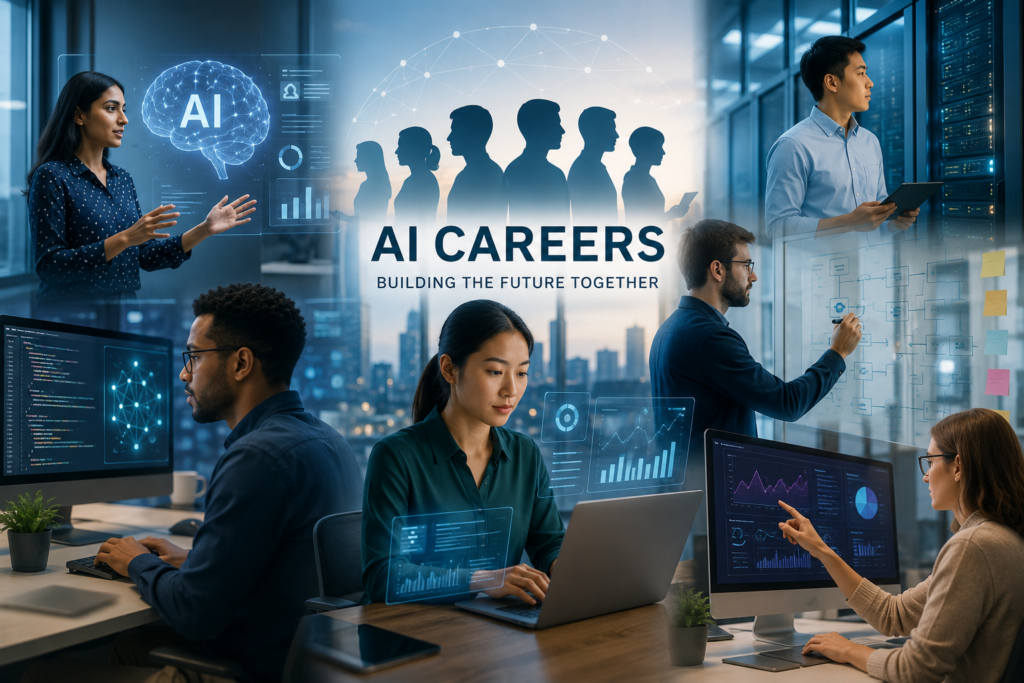
AI Careers
10 In-Demand AI Careers to Watch in 2026
Explore ten promising AI career paths and the skills professionals can develop to prepare for them.
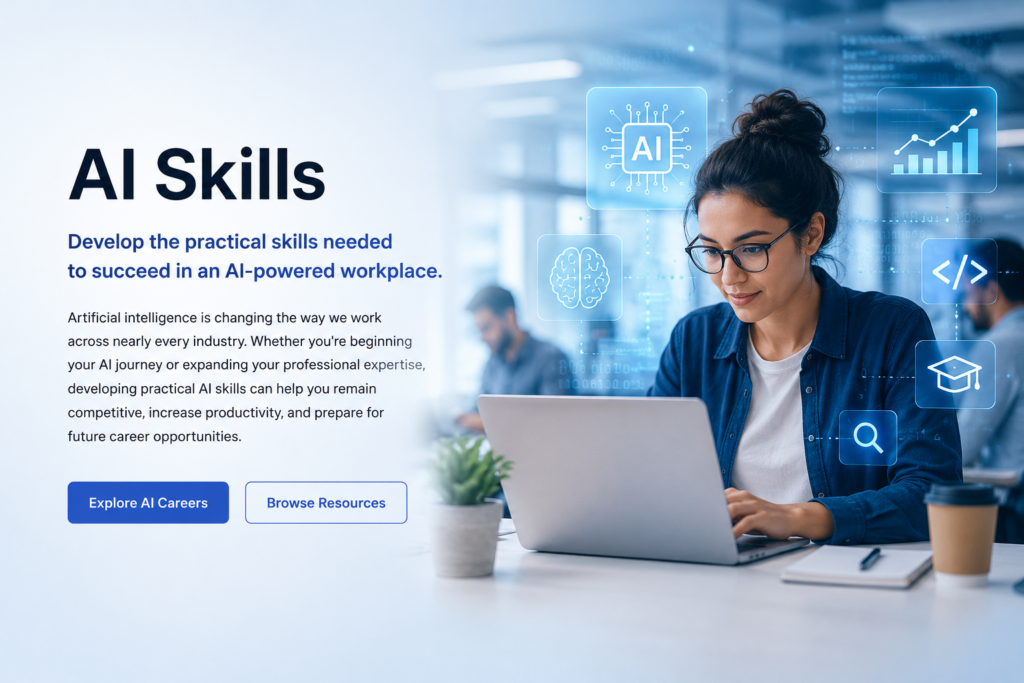
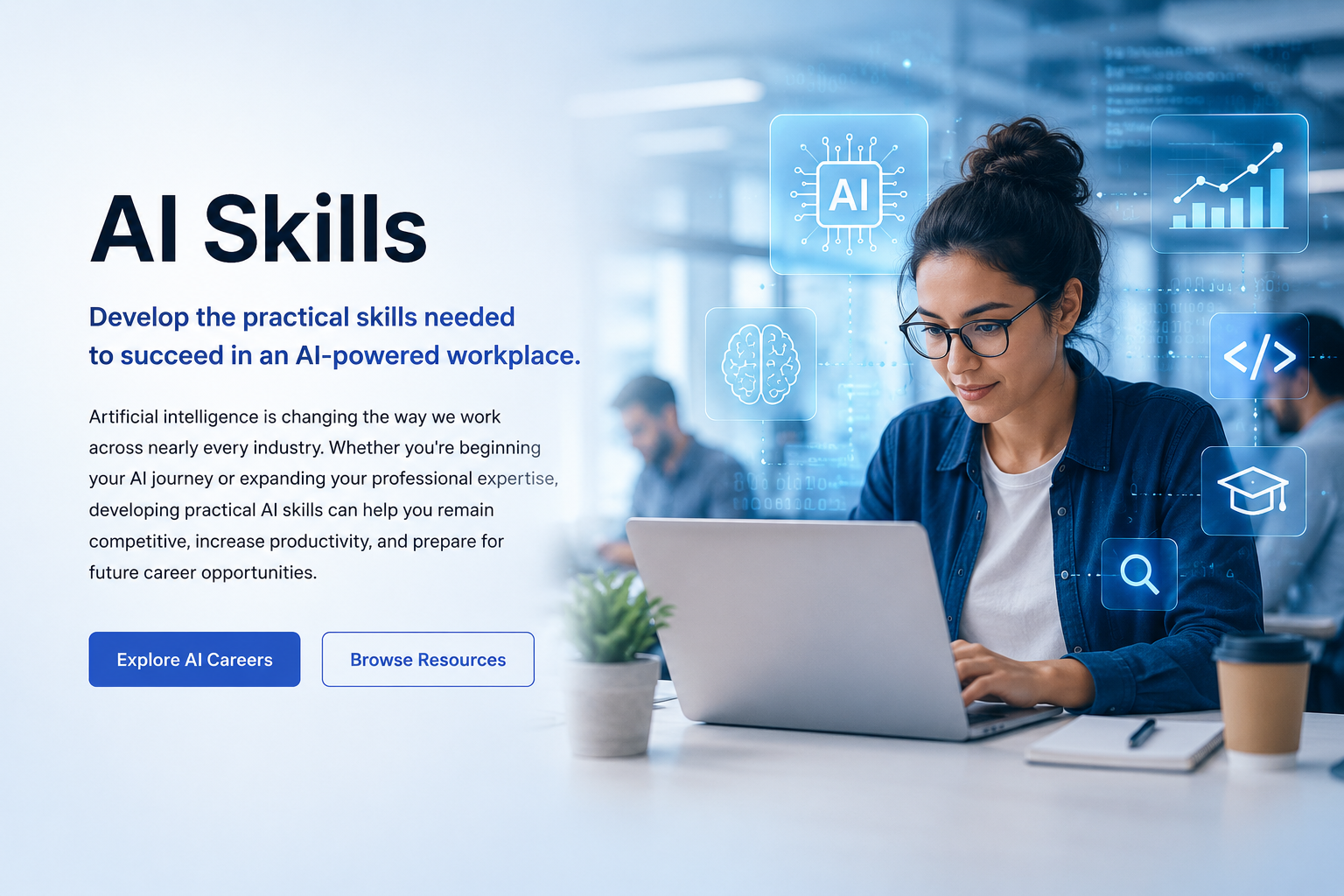
AI Skills
The AI Skills Every Professional Should Learn in 2026
Discover practical AI skills that can help professionals stay competitive as artificial intelligence transforms the workplace.

Explore More Careers
Explore AI Careers
Compare AI career paths and discover roles that match your skills, interests, and professional goals.
Continue Your AI Career Journey
Artificial intelligence is creating new opportunities across careers and industries, but preparing for the future doesn’t have to happen all at once. Continue exploring AI career paths, build practical skills, and use trusted learning resources to take the next step toward an AI-ready career. Whether you’re beginning your career, considering a change, or preparing for what’s next, AiCareerTrack is here to help you navigate the changing world of work