AI developments, career changes, skills and opportunities worth watching
Issue No. 1 • September 2026
A Moment of Remembrance
This September marks 25 years since the attacks of September 11, 2001.
We remember those who lost their lives, the families whose lives were forever changed, and the first responders, recovery workers, volunteers and others who answered tragedy with courage and service.
Twenty-five years later, the anniversary remains a reminder of the importance of resilience, preparation, service and our responsibility to one another.
What Matters This Month
AI Is Moving From Experimentation Into the Workplace
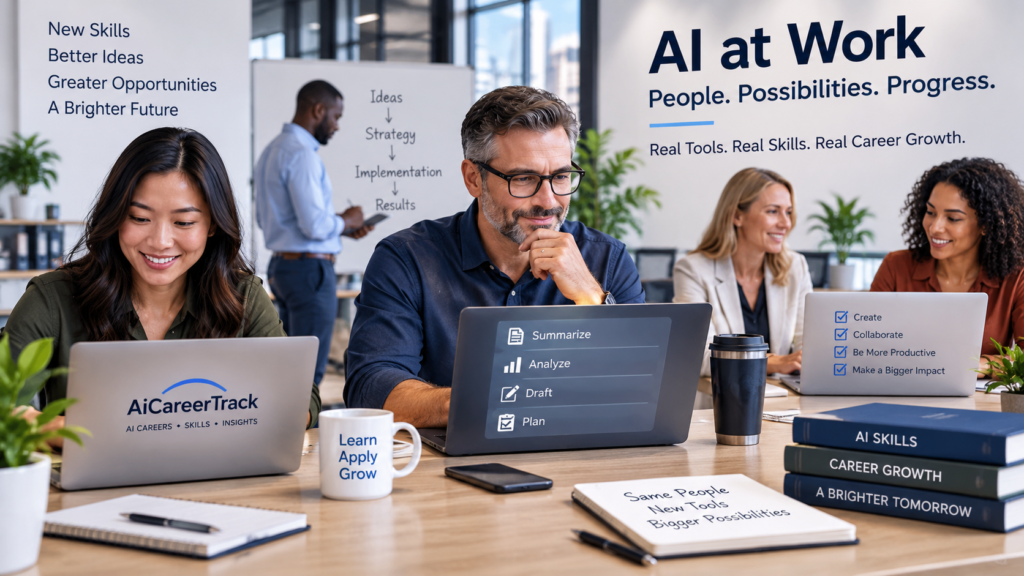
For several years, much of the AI conversation centered on increasingly capable models and chatbots. A larger transition is now underway.
Organizations are beginning to redesign work around AI, train employees to use it and invest in the physical infrastructure required to support it.
Technology-services company Wipro, for example, says its AI initiatives have freed capacity equivalent to approximately 20,000 employees. The company says workers have been redeployed into other roles while more than 100,000 employees have received advanced AI training.
At the same time, enormous investments are flowing into the chips, data centers, electricity, networking and cooling systems required for expanding AI use.
The career question is changing too.
Instead of asking only:
Will AI replace my career?
Consider asking:
How is AI changing the work inside my career—and how can I prepare for that change?
For many people, preparation won’t require becoming an AI engineer. It may mean combining existing professional experience with the ability to use, evaluate and work alongside AI effectively.
Three Developments Worth Watching
AI Is Changing How Work Gets Done
The Wipro example points toward an important possibility: AI can reduce the labor required for some tasks without necessarily eliminating every job associated with them.
Career takeaway: Before assuming you need an entirely new career, learn where AI can strengthen the expertise you already have.
AI Is Becoming a Physical-Infrastructure Story
AI requires far more than software. It depends on data centers, semiconductors, electrical systems, cooling, networking and construction.
U.S. electricity demand is expected to reach record levels as data-center development and other sources of demand expand.
Career takeaway: Some AI-related opportunities won’t have “AI” in the job title. They may appear in engineering, energy, construction, facilities, networking and technical operations.
AI Is Moving Toward Everyday Use
As organizations move from developing AI models to deploying assistants, agents and specialized applications, another category of work becomes increasingly important: implementing AI reliably inside real organizations.
Career takeaway: Opportunities can exist not only in building AI models, but also in integrating, supervising, evaluating and improving AI-assisted processes.
AI Infrastructure Watch
Where Will All the Electricity for AI Come From?
Behind every AI interaction is physical infrastructure.
Data centers require electricity, cooling systems, networking equipment, backup power and increasingly sophisticated facilities.
Google’s recently announced AI infrastructure investment in Finland illustrates the scale of the change. Alongside billions of dollars in data-center investment, the company entered a long-term agreement for nuclear-generated electricity.
AI is therefore becoming connected not only to the future of computing—but also to the future of energy.
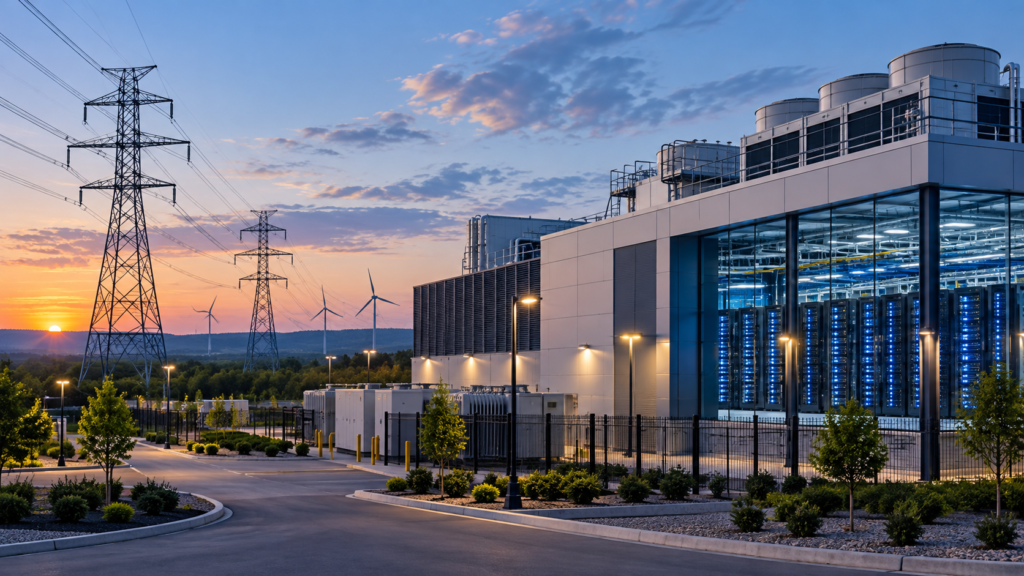
Infrastructure Career Watch — Electrical Power
AI growth is bringing greater attention to electricity generation, transmission, substations, transformers, grid management and power-system reliability.
If you already work in engineering, utilities, energy, construction or a related skilled trade, preparing for the AI economy may not mean leaving your profession.
It may mean understanding how AI is creating new demand inside the field you already know.
What It Means for Your Career
You don’t have to predict exactly what AI will do five years from now.
Instead, ask yourself:
What part of my work is AI beginning to change?
Which AI skill could make me more effective at that work?
Which human skills become more valuable as AI handles more routine tasks?
What new opportunities are appearing around my industry because of AI?
Choose one area to work on.
Small improvements repeated over time may be more useful than trying to reinvent your career overnight.
Career & Skill Spotlight
This Month: Prompt Engineering
You don’t need the job title “prompt engineer” to benefit from better prompting.
The practical skill is learning how to give AI useful context, define the result you need, establish constraints, request revisions and evaluate what comes back.
It isn’t about memorizing magical prompts.
It’s about communicating clearly with AI while applying your own professional judgment.
Try it: Choose one recurring task. Give AI the goal, audience, relevant context, constraints and desired output instead of a one-sentence instruction. Compare the result.
Explore the AiCareerTrack Prompt Engineering Guide →
Worth Learning or Using
September Learning Pick: OpenAI Academy — AI Foundations
Someone beginning to develop AI skills doesn’t necessarily need an expensive certification.
OpenAI Academy provides introductory learning for people developing practical foundations for working with AI.
Best for: Professionals, students and career changers looking for an accessible starting point.
AiCareerTrack takeaway: Don’t measure progress only by courses completed. Take something you learn and apply it to actual work.
Read the AiCareerTrack AI Foundations Review →
Continue Your AI Journey
How AI-Ready Are You?
Identify your current strengths and development areas with the free AI Readiness Self-Assessment.
Build Your Prompt Engineering Skills
Develop a practical AI skill you can apply across many different occupations and workplace tasks.
Choose Learning Resources Carefully
Explore our evaluation of OpenAI Academy’s AI Foundations program and decide whether it fits your learning goals.
One Action for September
Improve One Task With AI
Don’t try to transform your entire job this month.
Choose one task you perform repeatedly—research, drafting, summarizing, planning, analysis, documentation or something appropriate to your work.
Use AI with that task several times. Improve your instructions. Check the results. Notice what saves time and what still requires your judgment.
At the end of the month, ask:
Did AI actually make this work better?
If yes, you’ve found something worth building on.
New from AiCareerTrack: Watch on YouTube
AiCareerTrack is now on YouTube. Our first video explores 10 in-demand AI career paths across technology, business and industry—including what these professionals do, the skills that can help you prepare, and how your existing experience may fit into an AI-enabled career.
AiCareerTrack Monthly — September 2026 | Issue No. 1
Helping professionals build AI-ready careers through practical guidance, trusted insights and lifelong learning.