AI in everyday life is becoming increasingly visible, and its effects extend far beyond careers and workplaces. It is beginning to influence how we maintain our homes, travel, learn, manage everyday tasks, operate small businesses, and make decisions about our time and money.
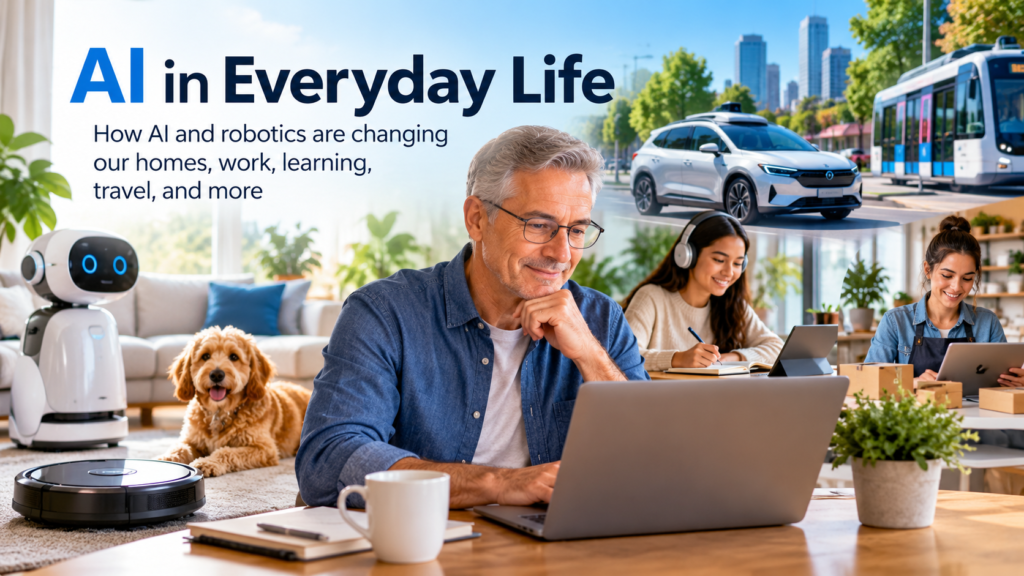
Some of these changes are easy to see, while others are happening gradually. Robotics and automation are moving into activities once performed almost entirely by people. AI-powered tools are becoming part of education, transportation, personal productivity, and everyday services.
These developments can create convenience and new opportunities, but they can also raise important questions. Is a new AI-powered product actually useful? What does it cost compared with the task it replaces or improves? Could it change an occupation or create new kinds of work? Does it require new skills? And are there privacy, safety, reliability, or other concerns worth considering?
AiCareerTrack will explore these changes from a practical perspective. Our goal is not to promote technology simply because it uses artificial intelligence. We will look at how AI, robotics, and automation may affect real people—and help you consider where these technologies may be useful, where caution is appropriate, and what they could mean for your work, finances, home, skills, and future opportunities.
Home & Robotics
AI and robotics are beginning to take on more physical tasks around the home. Robotic lawn mowers, cleaning devices, home monitoring systems, and other automated equipment can perform work that once required regular hands-on attention.
We will examine these technologies from more than a convenience standpoint. We will consider what they cost, how well they work, what limitations they may have, and whether they provide meaningful value. We will also look at how home robotics could affect occupations and small businesses that provide services such as landscaping, cleaning, maintenance, installation, and repair.
As these technologies develop, they may reduce the need for some repetitive tasks while creating demand for different skills and services. Understanding both sides of that change can help homeowners, workers, and business owners make better decisions about when automation is useful and where human knowledge and experience still matter.
One example of this trend is robotic lawn care. ANTHBOT develops autonomous robotic lawn mowers that use technologies such as intelligent navigation and automated mowing to reduce the hands-on work involved in maintaining a lawn. AiCareerTrack plans to examine this type of technology not only as a consumer product, but also for what it may mean for landscaping work, small businesses, robotics skills, and future service opportunities.
Affiliate disclosure: AiCareerTrack participates in the ANTHBOT affiliate program and may earn a commission if you make a qualifying purchase through our link, at no additional cost to you.
Transportation & Mobility
Artificial intelligence is increasingly influencing how people and goods move. Driver-assistance systems, autonomous vehicles, delivery robots, intelligent traffic systems, and AI-supported transportation networks are gradually changing both personal transportation and commercial operations.
We will look beyond the technology itself to consider what these developments could mean for drivers, transportation workers, businesses, and consumers. Some applications may improve safety, efficiency, accessibility, or convenience, while others may introduce new costs, limitations, regulatory questions, or concerns about reliability and responsibility.
Transportation automation may also change existing occupations while creating demand for new technical, maintenance, monitoring, and support roles. AiCareerTrack will examine these changes with an emphasis on what is actually happening, which skills may become more valuable, and how individuals and businesses can prepare as transportation technology evolves.
Learning & Personal Development
AI is changing how people learn, practice skills, and find information. AI tutors, personalized learning systems, language tools, research assistants, and other educational technologies can provide new ways to learn at different ages and stages of life.
We will examine how these tools can support learning without assuming that AI should replace teachers, experts, or independent thinking. Important questions include the accuracy of AI-generated information, privacy, cost, accessibility, and whether a tool actually helps someone understand a subject rather than simply produce an answer.
For people preparing for changing careers or simply wanting to continue learning, these technologies may make education more flexible and personalized. AiCareerTrack will explore practical ways to use AI for lifelong learning while emphasizing verification, responsible use, and the development of skills that remain valuable as technology changes.
Money & Personal Productivity
AI-powered tools are increasingly being used to organize information, manage schedules, compare choices, automate routine tasks, and assist with everyday financial and personal planning. Used carefully, these tools may help people save time, understand information, and make routine activities easier to manage.
We will examine where AI can provide practical assistance while also recognizing its limitations. Financial decisions, privacy, security, inaccurate information, subscription costs, and overreliance on automated recommendations all deserve careful consideration. An AI tool can help organize or analyze information, but important financial decisions may still require independent research or qualified professional advice.
AiCareerTrack will explore tools and approaches that may improve personal productivity and help people make better use of their time and resources. Our focus will be on practical value: whether a technology solves a meaningful problem, what it costs, what risks or tradeoffs it introduces, and whether simpler alternatives might work just as well.
Health, Aging & Independence
AI and robotics may increasingly help people manage everyday activities, remain independent longer, and stay connected with family, caregivers, and important services. Technologies ranging from smart-home assistance and fall detection to mobility devices, medication reminders, and emerging assistive robots may become more common in daily life.
We will examine these technologies carefully, particularly when health, safety, privacy, or personal information is involved. An AI-powered product may provide useful assistance, but it should not automatically be treated as a substitute for qualified medical care, professional advice, or human support. Reliability, security, accessibility, cost, and ease of use can be just as important as the technology itself.
AiCareerTrack will explore how these developments may affect individuals, families, caregivers, healthcare workers, and businesses that serve an aging population. We will also look at the new skills, occupations, services, and business opportunities that may emerge as technology becomes a larger part of helping people live safely and independently.
Small Business & Income Opportunities
AI, robotics, and automation are not only changing established companies. They may also create opportunities for individuals and small businesses to offer new services, improve existing operations, reduce repetitive work, and serve customers in different ways.
We will explore opportunities realistically rather than assuming every new technology will produce an easy source of income. A useful opportunity should solve a genuine problem, have customers willing to pay for it, and make sense after considering equipment costs, subscriptions, training, competition, maintenance, and the time required to operate the business.
AiCareerTrack will examine how emerging technologies could support existing businesses or lead to new services and income opportunities. This may include installing, maintaining, operating, or supporting AI-enabled equipment; helping businesses adopt useful AI tools; and identifying services where technology and human experience can work together rather than simply replacing one another.
AI Products & Services We Evaluate
As AI and automation become part of everyday life, more products and services will promise to save time, reduce work, improve productivity, or provide capabilities that were previously difficult or expensive. Some may offer meaningful value. Others may provide only modest benefits or may not be worth their cost.
AiCareerTrack will evaluate selected products and services based on their practical usefulness and relevance to the changes we cover. We may consider factors such as what problem a product solves, how its AI or automation is actually used, its cost and ongoing expenses, ease of use, limitations, privacy or safety considerations, and how it could affect jobs, businesses, skills, or everyday activities.
Some products or services we discuss may have affiliate relationships with AiCareerTrack. When they do, we will disclose that relationship. An affiliate relationship will not determine whether we recommend a product or what we say about it. Our goal is to help readers understand both potential benefits and drawbacks so they can decide whether a product or service makes sense for their own circumstances.
Preparing for AI in Everyday Life
Artificial intelligence will not affect everyone in the same way or at the same pace. Some changes may arrive quickly, while others may take years to become practical or affordable. Some technologies will succeed, and others may disappear after failing to provide enough value.
The goal does not have to be adopting every new AI product or worrying about every prediction. A better approach is to understand what is changing, evaluate new technologies carefully, and decide which developments are relevant to your own work, home, finances, learning, or future plans.
AiCareerTrack will continue helping you follow those changes. Careers and workplace skills will remain an important part of our focus, while AI in Everyday Life will help us explore the broader ways artificial intelligence, robotics, and automation may create challenges, choices, and opportunities beyond the workplace.
Explore the Human Side of AI
Artificial intelligence is changing more than our daily routines. It is also reshaping movies, music, writing, creativity, and how we understand the world around us. Explore what these changes mean for human judgment, relationships, originality, and personal meaning.
Read the Full Article: Living in an AI-Generated World: What Makes Us Human? →